
You and Your Dog Are Not Behind
There's something I want you to hear, especially if you're living with a dog who's wonderful in a hundred ways and still working on one or two: you are not alone, and there is nothing wrong with you or your dog.
Every dog I've ever known comes with their own gifts and their own gaps. The brilliant recaller who can't settle in a busy room. The gentle soul who turns into a different animal at the sight of a skateboard. The dog who nails every cue at home and forgets his own name the moment a squirrel appears. That's not failure. That's just what it looks like to share your life with an individual rather than a finished product. It's true of the dogs I work with, it's true of the dogs belonging to the trainers I most admire, and, I'll say it out loud, it's true of my dogs too.
So here it is: Otter is still not a proficient loose-leash walker.
Gulp. There, I said it.
And honestly, I'm glad to say it, because the most useful thing I can offer you was never going to be a perfect dog. A perfect dog is a story we sell each other in fifteen-second clips. What I can actually offer is a real process, running in real time, on a dog I love, using the very same games I'd put in your hands.
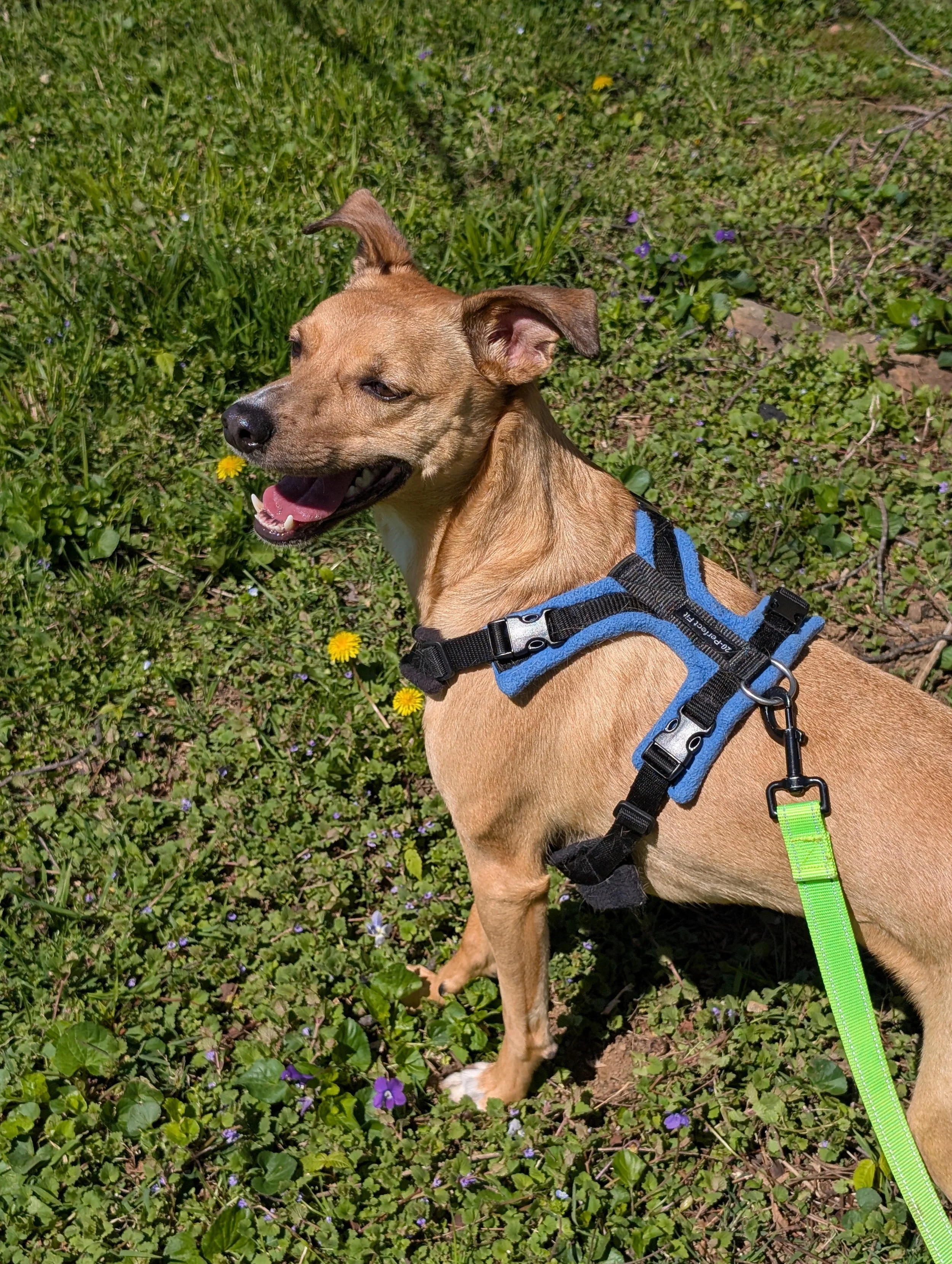
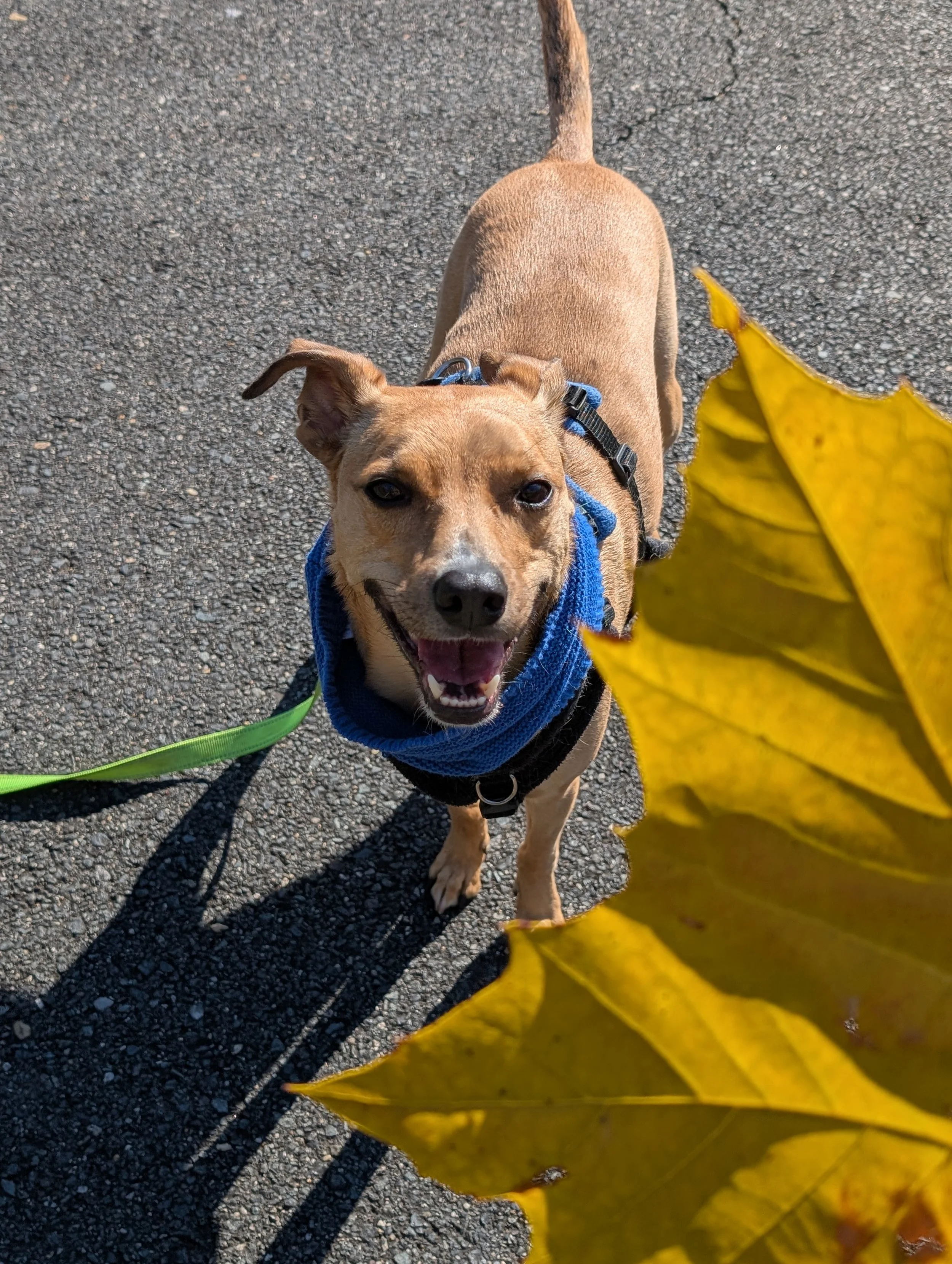
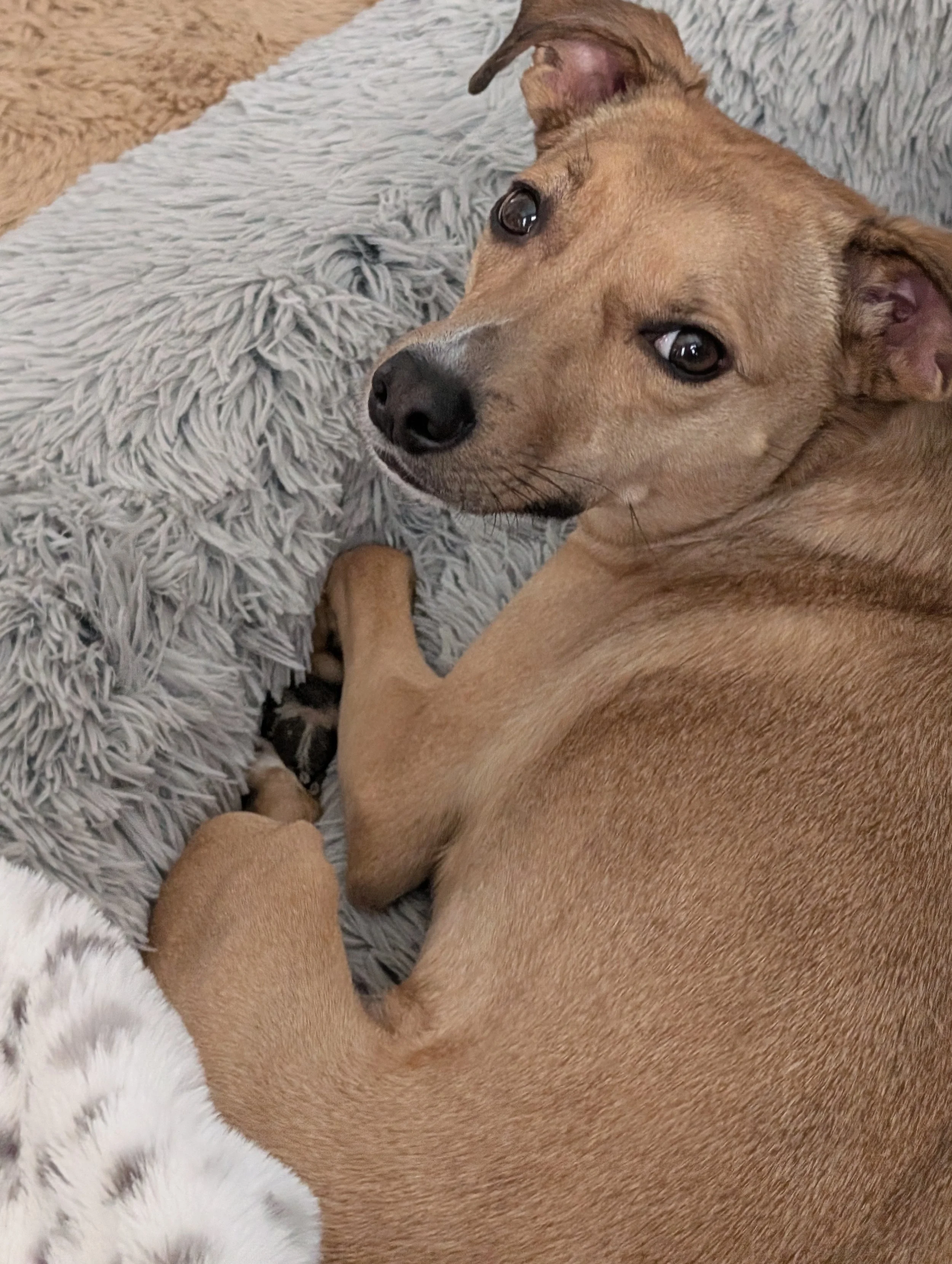
Otter adores squirrels. Not casually. In a whole-body, lit-up, this is what I was built for kind of way. In our fenced backyard, off leash, given the opportunity, he chases them, and I want to be careful with how I say the next part: there is nothing wrong with him for this.
Chasing isn't a character flaw.
It's a deeply natural, instinct-driven behavior with a powerful internal payoff, a flood of feel-good chemistry every single time he does it. It's one of the most self-reinforcing things a dog can do. Nobody has to hand him a treat for it. The chase is the treat.
If Otter were a farm dog, and this were a working life where moving wildlife along was useful and right, that would be a different conversation entirely, a different lifestyle, a different set of choices, and I'd honor that too.
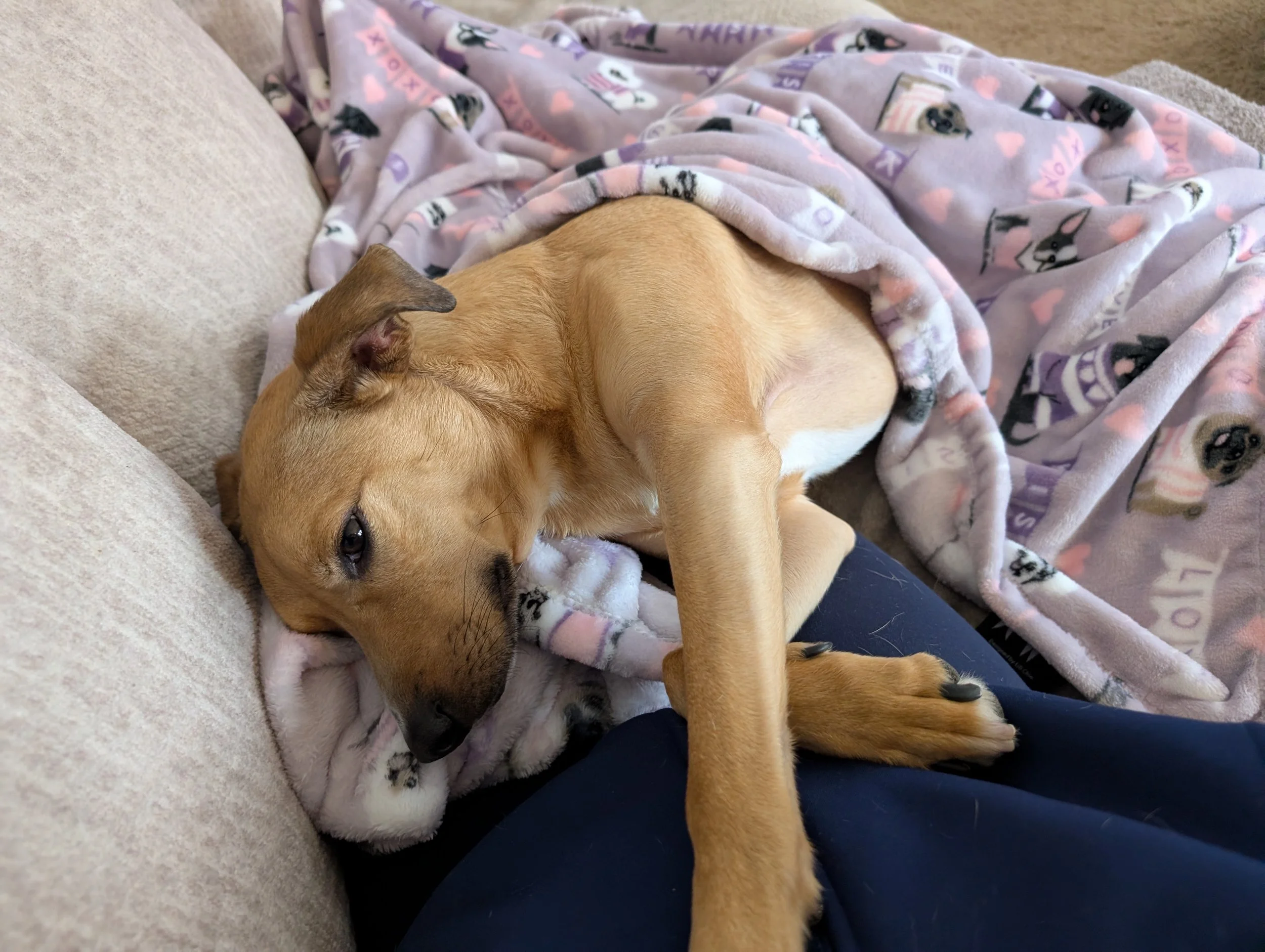
But Otter's job isn't to guard the yard from the fun-loving, tail-swishing squirrels. He's a companion. A hiking buddy. A demo partner, so I can show you what the games we use to teach skills actually look like. He's my heart dog, the one who cuddles up with me on the couch to close out another perfect day together. And it's my hope, over time, that he learns to disengage from wildlife rather than orbit it.
On a walk, long line or short lead, he might still spot a squirrel and make his move. But the leash interrupts the rehearsal before it can finish, and that hands me a job I can actually do. I support him. I help his body disengage first, and then, after a little distance and a little time, his mind catches up and comes along. A behavior being natural, I keep reminding myself, doesn't make it a behavior I want to keep growing. Natural and desirable are not the same word.
Which brings me to the thing I really came here to say, the quiet idea underneath all of it: every repetition of a behavior is a vote for that behavior happening again.
Dogs get good at what they practice. Not what we wish for, not what we patiently explain, what they actually do, over and over, is what wires in deeper. So a huge part of training, maybe the most underrated part, isn't about teaching new things at all. It's about deciding, on purpose, which behaviors get rehearsed and which ones quietly don't. I picture two columns. In one, the behaviors I'd rather Otter not practice — the squirrel chase lives there. In the other, the behaviors that are healthy for both ends of the leash: engagement with me, disengagement from the world around him, the loose and easy walking that's good for his body and mine. The work is gently moving energy out of the first column and into the second. Not by suppressing who Otter is.
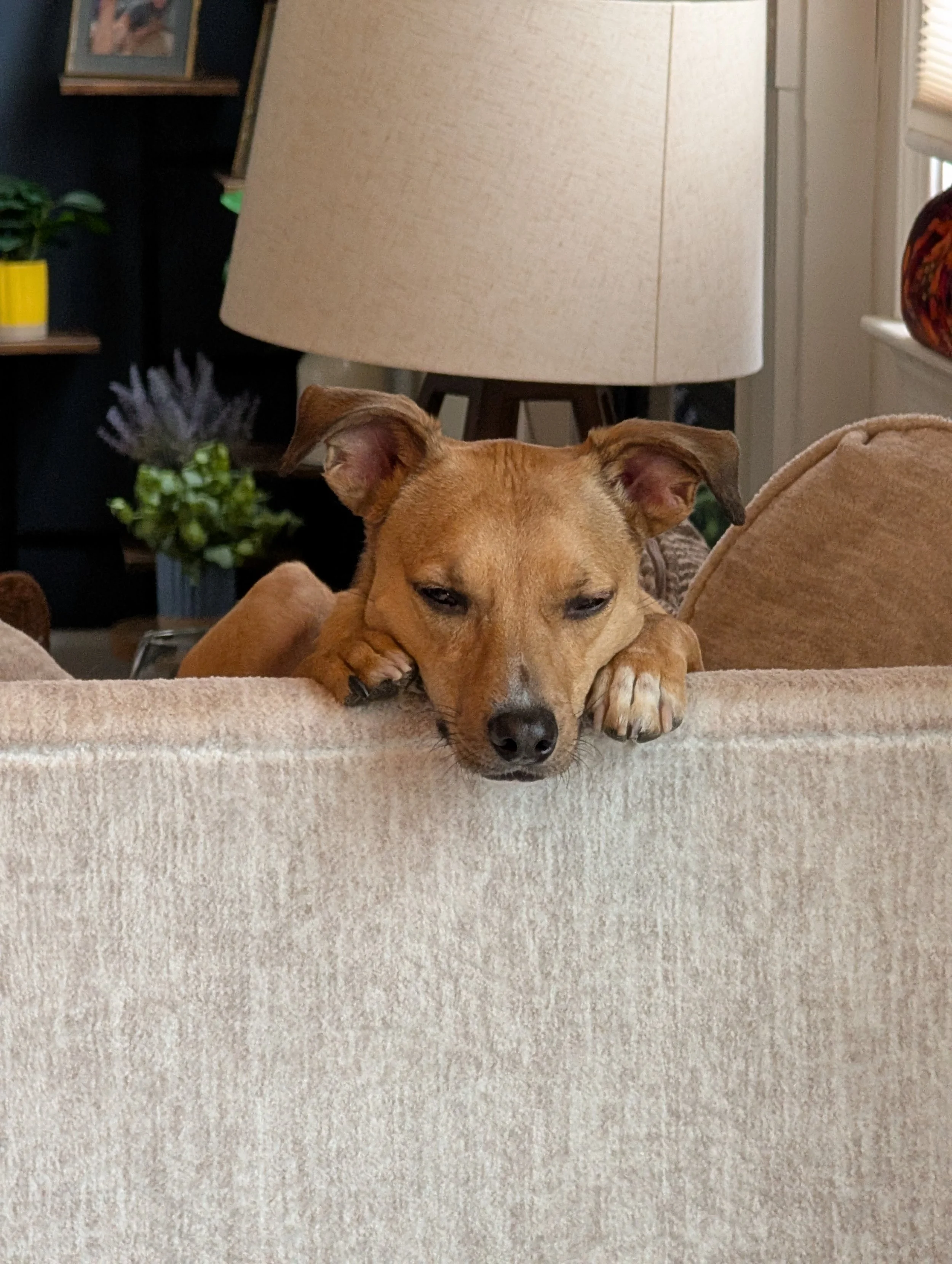
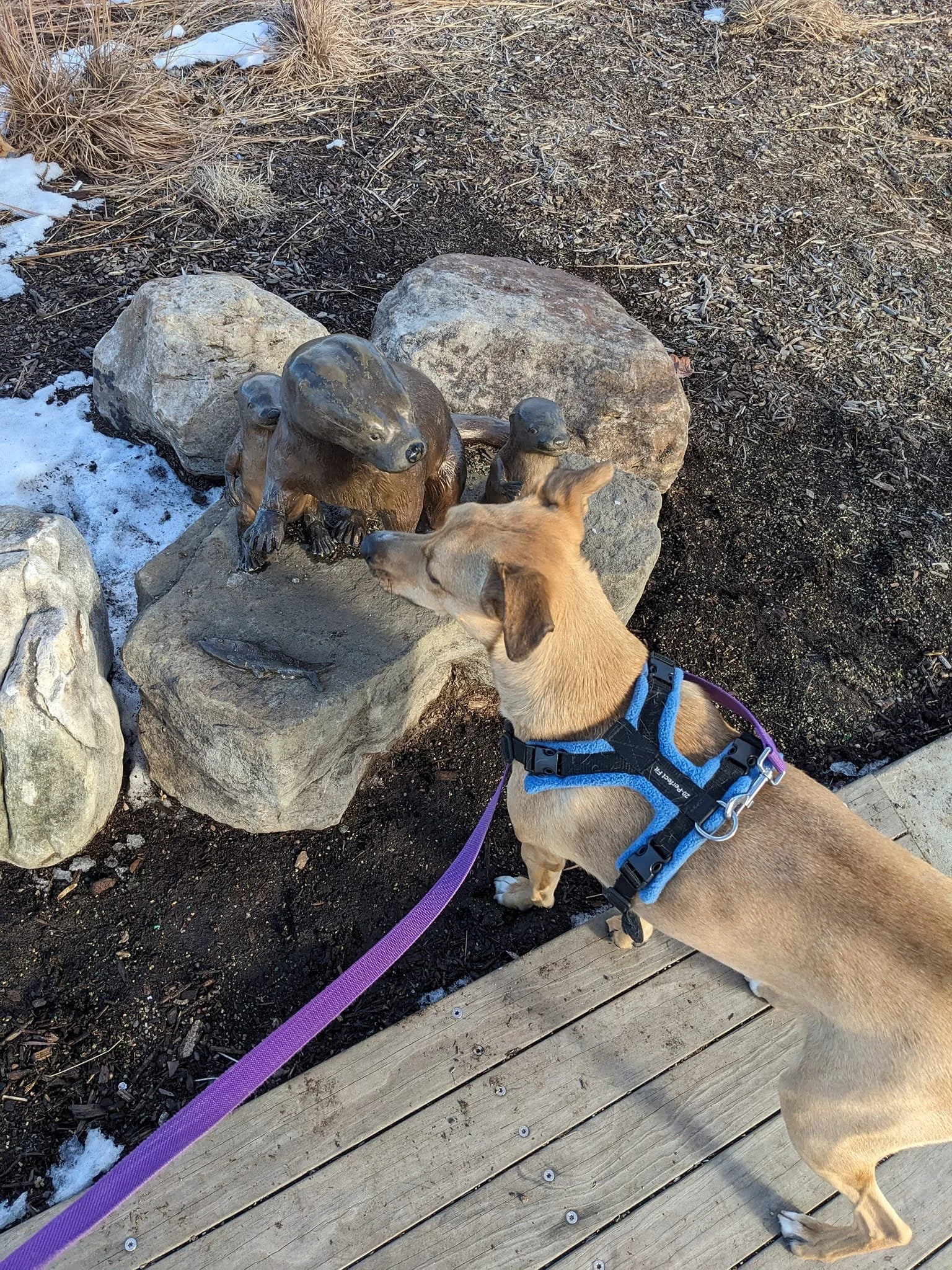
That's the part I find genuinely fun, because it turns out to be less about willpower and more about design, also known in the dog behavior world as (and in my class) as management. I'm not pretending squirrels don't exist, and I'm certainly not punishing him for being a dog. I'm just opting for loose lead practice rather than squirrel chasing practice. Remember, they get better and better at what they practice.
On lead in front of the house, I use his daily food to grow the behaviors I actually want: eyes coming back to me, the choice to turn away from something interesting, the calm connected walking that does both of us good. Same dog. Same drive. Same enormous feelings about the world. I'm just being intentional about which version of Otter gets the reps.
One of the small, repeatable ways we grow that second column is a game we love called Scatter and Move. I scatter a few pieces of low-value food on the ground and step a little away while Otter eats. He gets to be independent for a moment, head down, doing his own thing, and then, the instant he finishes and turns back toward me, that reconnection gets marked and met with something better from my hand. Scatter, disengage, return, reconnect. Over and over, in a low-stakes setting, we're rehearsing the very loop I'm hoping for out in the wider world: the freedom to disengage and the pull to come back. Two halves of the same skill, turned into something he finds genuinely fun.
And this is exactly what I'd help you do. I'm not going to hand you a finished dog or pretend I own one. What I have is a way of seeing, and a set of skills I'm using on my own dog, in my own front yard, right now with the same patience and compassion I'd bring to yours. Otter isn't there yet. Neither am I, entirely; I'm still learning his rhythms, reading his thresholds, finding the exact distance where he can still think. But that's the whole thing, isn't it. We're a team in progress, and I'd far rather show you the middle of the story than fake the ending.
I'll keep sharing his progress as the skills grow. Watch the dog, not the timeline. And if you'd like to see Scatter and Move in action, the video's just below. Give it a go and let me know how it goes.
Here we go. 🐿️
🎥 Watch: Scatter and Move — building independence and reconnection, one easy rep at a time.