
Ask Less, Offer More: Honoring Odin in His Senior Years
There's a particular kind of love that arrives quietly, somewhere in the back half of a dog's life. It doesn't announce itself the way puppyhood does. It doesn't bound across the yard. It settles. It softens. It learns to move at the speed of an aging body and call that pace sacred.
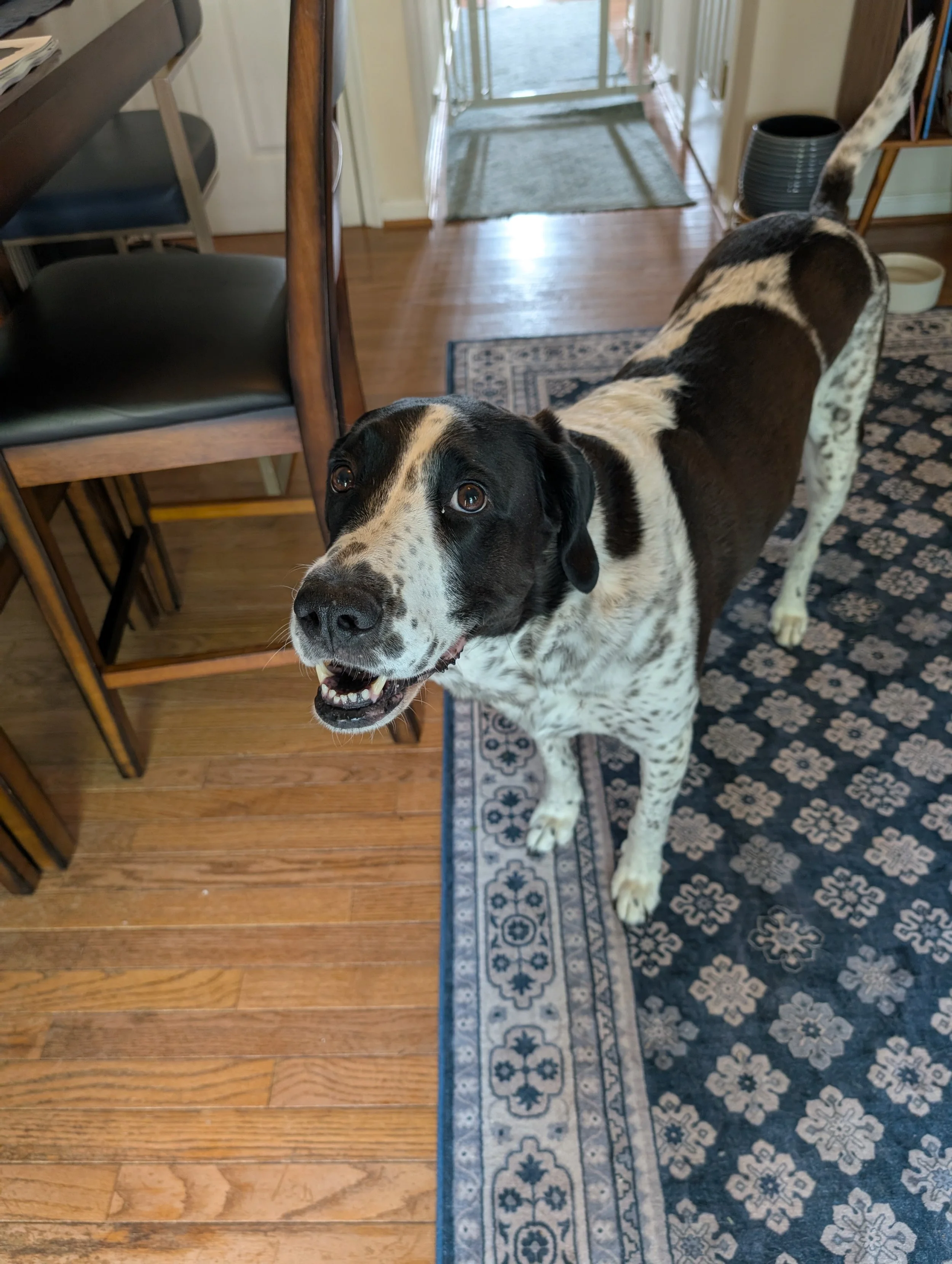
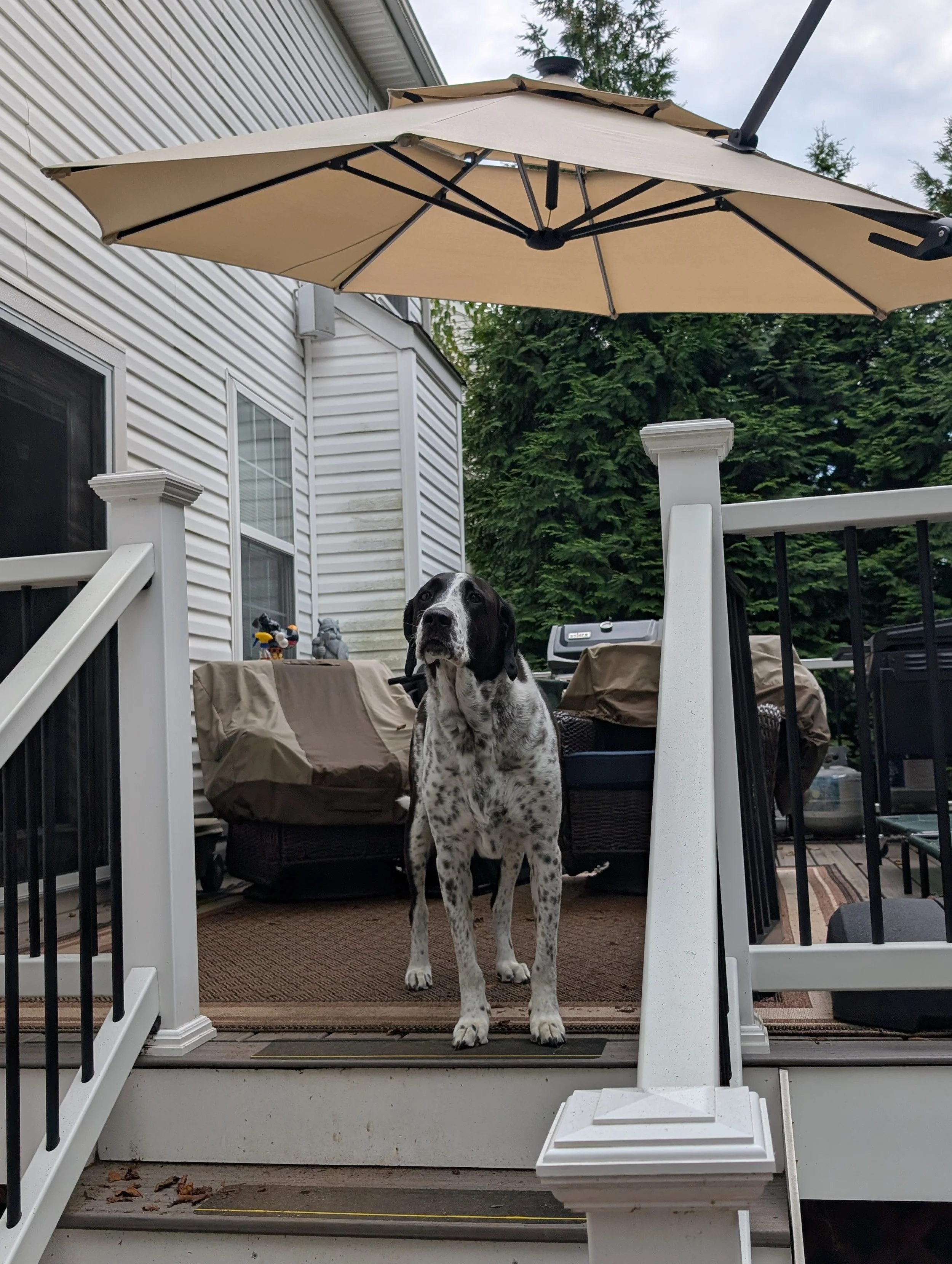
Odin turns eight this June. To some people, eight isn't old — but Odin is a big dog, around ninety pounds, and large dogs carry their years differently. They age sooner. They feel it deeper in the joints. So in our home, we treat Odin as the senior he is, and we've reshaped his whole world to honor it.
Somewhere along the way, the question in our house shifted. It stopped being what can I teach Odin and became what does Odin need from the world now? That single turn — from training the dog to redesigning the environment around him — is the whole heart of how we honor his senior years.
The floor beneath his feet
We started where he stands. Literally.
Slick floors are an invisible cruelty to a dog of any age, and a quiet danger to an aging one. Every step on hardwood or tile becomes a small negotiation with gravity — a bracing, a clench, a hesitation. So we made his surfaces trustworthy. Traction where there used to be slipping. Sure footing where there used to be doubt.
And here's the thing: this isn't only a senior-dog fix. Good footing builds confidence and prevents injury for dogs of everyage. No one — two legs or four — likes to feel like they can't trust the ground beneath them. When the floor is reliable, a body moves freely, and a freely moving body stays sound and self-assured.
This is the lens I keep returning to, borrowed from Dr. Susan Friedman: the problem is rarely inside the animal. It lives in the environment. A senior dog who hesitates at the top of the stairs isn't being stubborn. He's reading the floor. So we change the floor.
A soft place on every floor
We thought about the stairs themselves, too — not just the surface, but what they cost him.
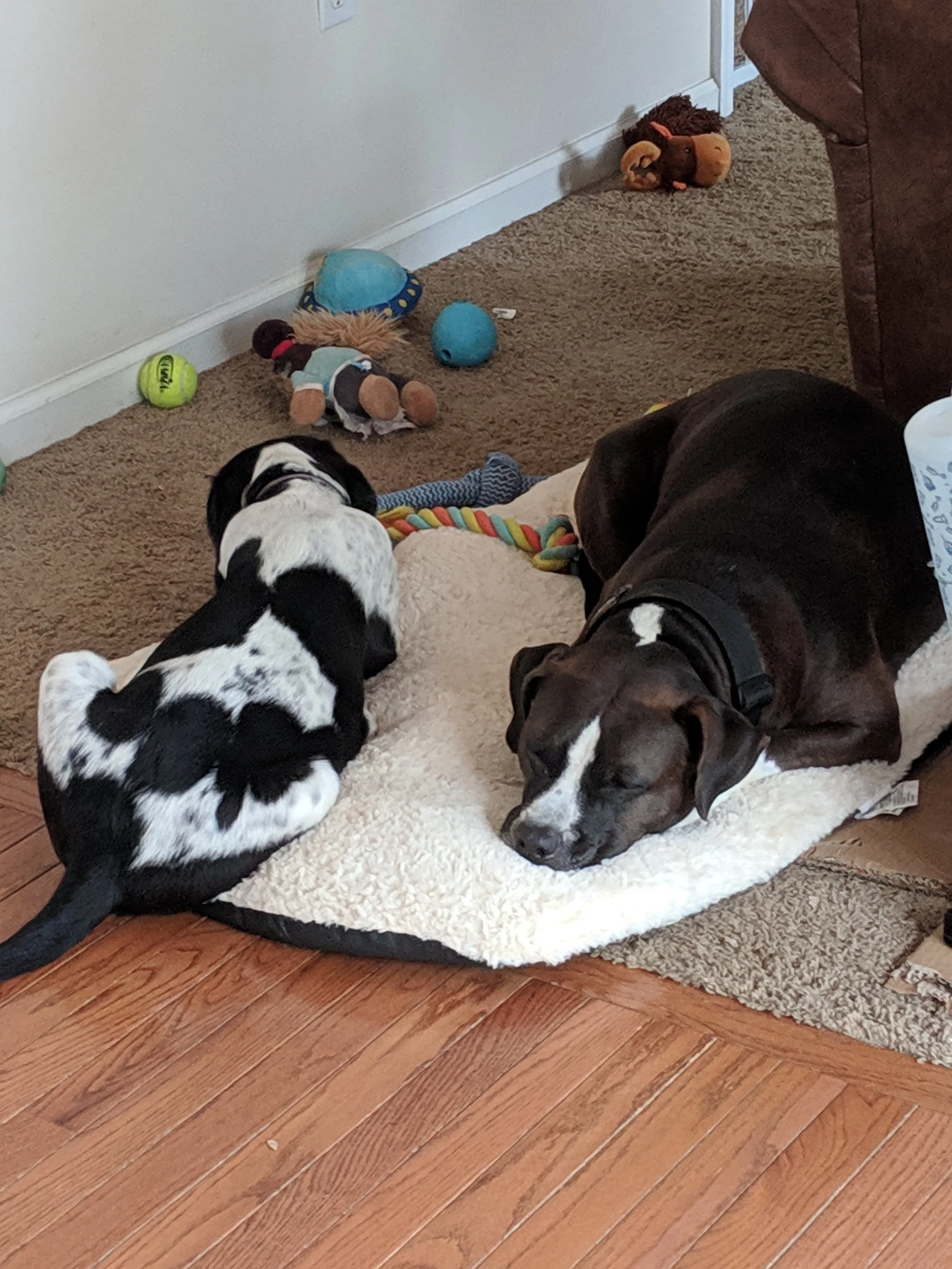
For a dog with aging joints, climbing a flight of stairs to reach a comfortable bed is a tax he shouldn't have to pay just to rest. So we put a twin mattress upstairs and a twin mattress downstairs. Wherever Odin is, there's already a soft, supportive place waiting for him — no climbing required to earn it.
Now, not every dog needs a bed that size; this is a big dog with a big body to support, and the larger surface lets him stretch out fully and take the pressure off his joints. The size isn't the point. The principle is: comfort should meet your dog where he already is, on every floor he uses, so that resting never depends on a hard journey to get there.
Comfort as a daily practice — and a medical-first mindset
Quality of life is our north star, and it's built from ordinary decisions repeated with intention.
Under the care of Dr. Anita Walton at Locust Grove Veterinary Clinic, Odin is on pain management for his arthritis. I want to say that plainly, without apology, because I know some people still carry a quiet hesitation about it — as though discomfort is just part of getting old and ought to be endured. It isn't. Pain narrows a life. It shrinks the world down to the next ache. Meeting it head-on, with veterinary guidance, gives Odin his world back. (It helps that Dr. Walton's clinic offers supportive therapies like therapeutic laser and musculoskeletal care alongside traditional medicine — more tools for keeping an aging body comfortable.) We also use supplements chosen to support this exact stage of his life. None of it is glamorous. All of it is devotion.
Here's the part I most want every dog owner to hear: talk to your vet about pain management as your dog ages — and especially if you notice any change in their behavior. A dog who suddenly snaps, hesitates, withdraws, or "isn't himself" is so often telling us something physical. Before we ever reach for a behavior-change plan, we have to rule out pain and illness first. Behavior changes should be viewed as medical first. The grumpiness on the stairs, the new reluctance to be touched, the shorter fuse — these are frequently the body talking, not the personality changing. We owe our dogs that investigation before we make any assumptions about who they're becoming.
Quiet zones and the gift of less
Here's something that took me time to learn: a senior dog doesn't always need more enrichment. Sometimes he needs more peace.
So Odin has quiet zones — spaces that are unmistakably his, where the pace slows and nothing is asked of him. Where he can simply be without being recruited into the household's energy. Rest isn't the absence of training. For an older dog, rest is the training. It's the thing the whole nervous system is hungry for.
We've leaned into a slower flow across the board. Less hurry, fewer transitions, more room to breathe between one moment and the next. When you live at the speed of a body that's earning its rest, you start to notice how much of the day you used to spend rushing for no reason at all.
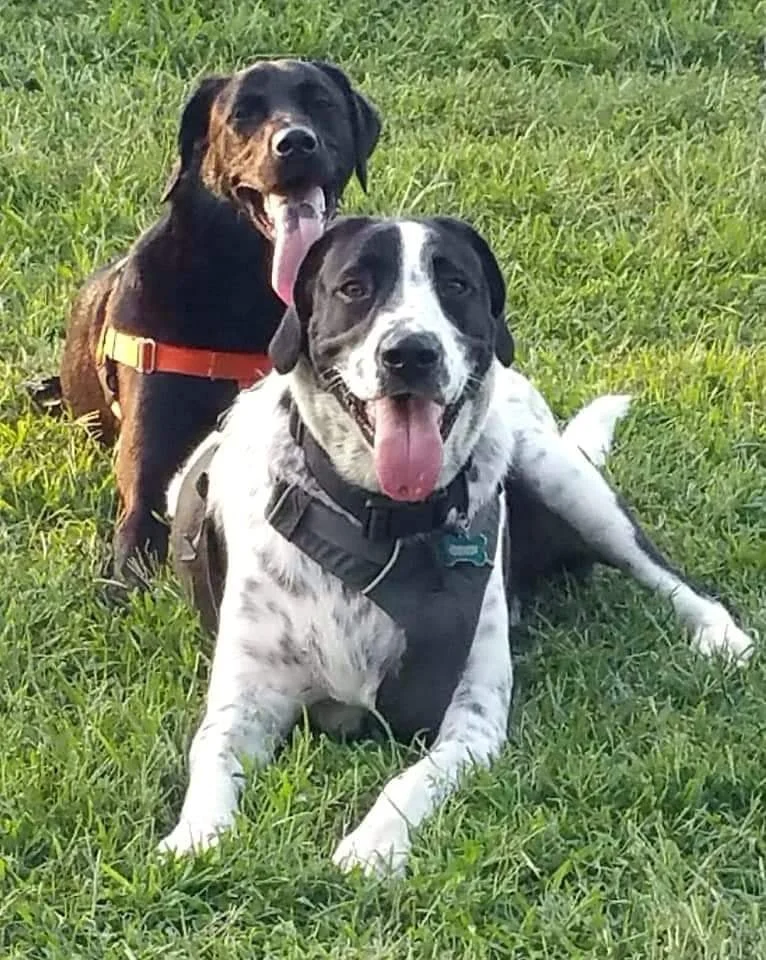
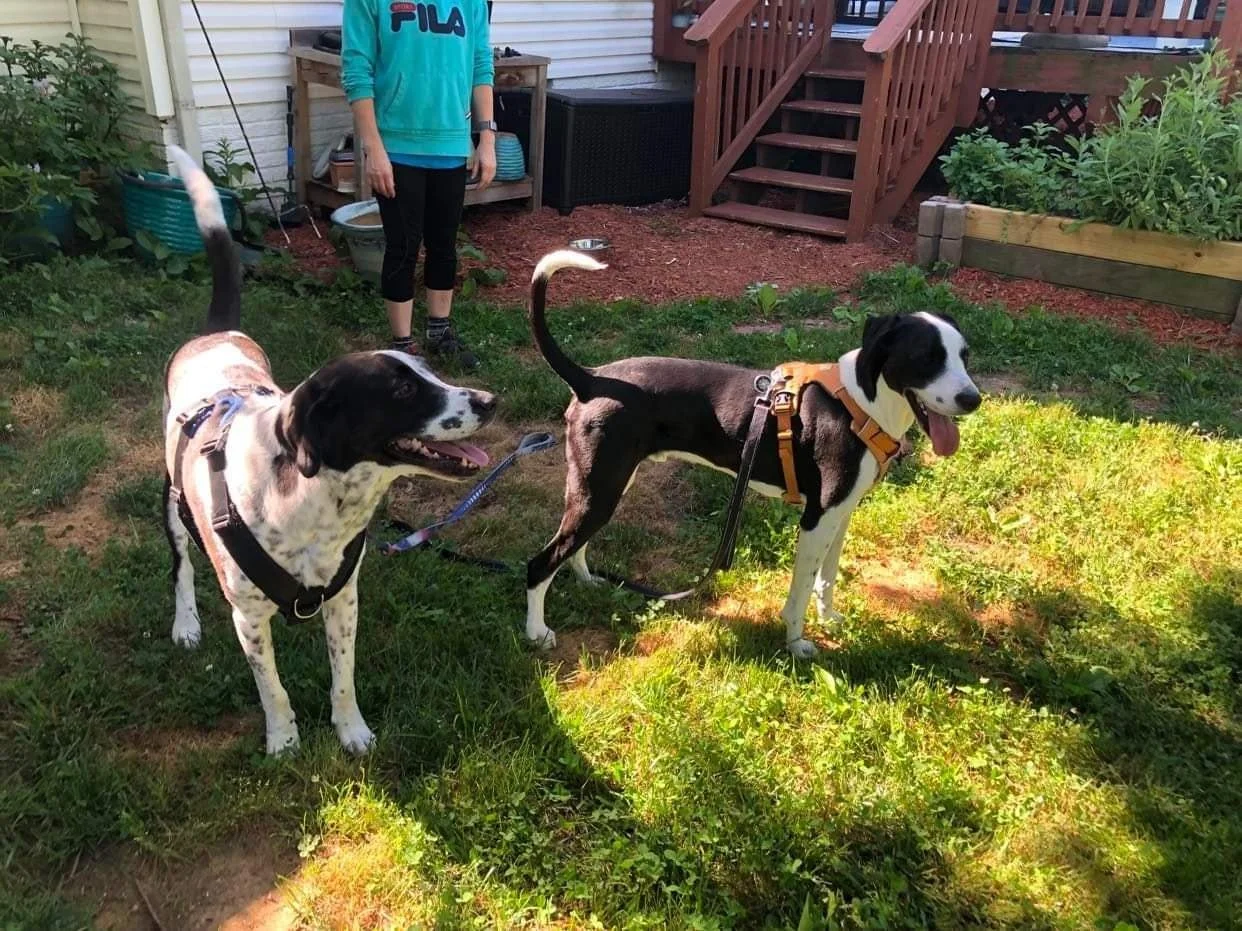
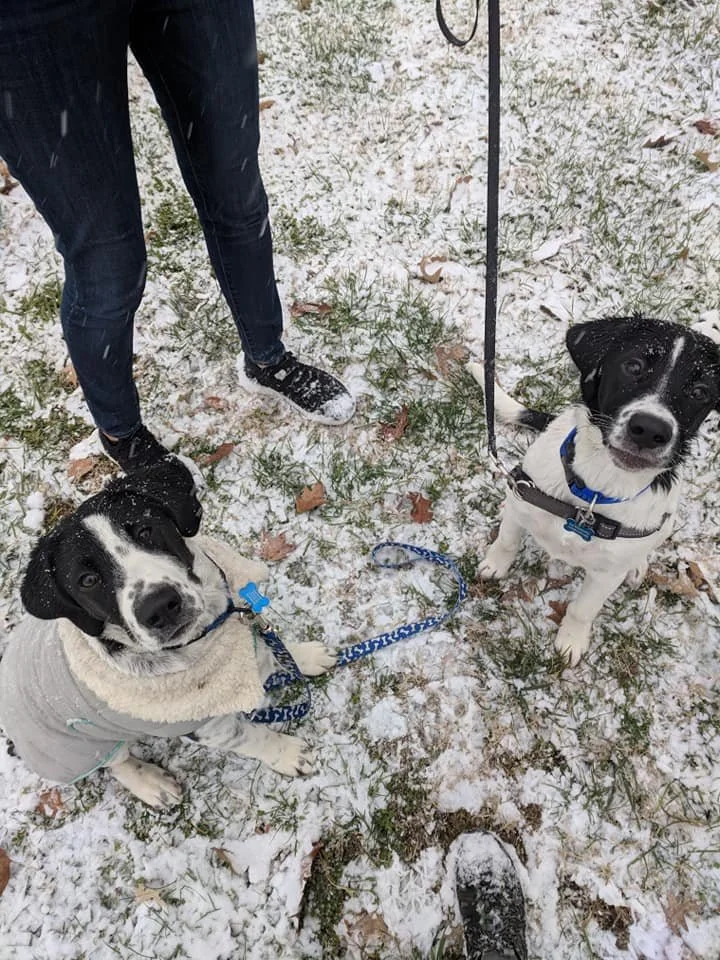
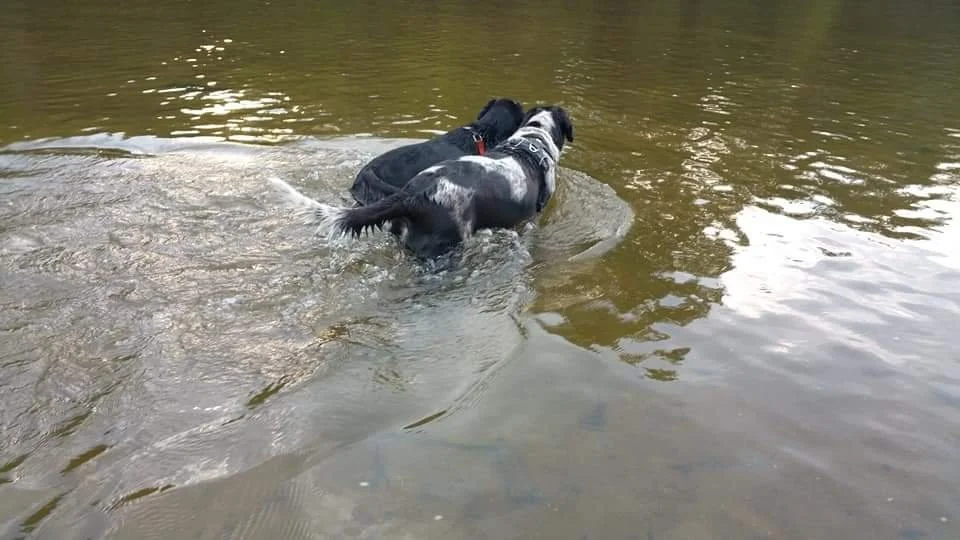
A gated home, and friendships built on space
We share our home with little dogs, too — Murphy Roo and Otter. And one of the most important — and most misunderstood — things we do is use a gated setup to give everyone what they need.
We have a little-dog zone and an Odin zone. The gates aren't punishment, and they aren't a sign that anyone has failed. They're architecture for peace. They let Odin rest without being pestered, and they protect the little ones from having a negative experience they didn't ask for and wouldn't understand.
Because here's what's actually happening when a young dog pesters a senior one: it isn't that Odin is "grumpy" or the little dogs are "bad." None of those labels are true, and none of them help. A body in pain has less room to spare. Every dog carries a kind of bucket — a reservoir of arousal and stress that fills and empties through the day. When a senior dog is managing discomfort, that bucket starts the morning already partway full. There's simply less buffer. If a bouncy youngster keeps poking at it, the bucket can overflow — and an overflow helps no one. It's hard on Odin, who would never choose that moment, and it's a rough lesson for the younger dogs, who deserve to grow up beside a calm elder rather than one who got pushed past what his body could hold.
So I manage the environment instead. I create space. Sometimes the little dogs even get separated from each other, so each one gets a break from the constant company. This isn't the right setup for every family — but it is exactly right for our multi-dog household. And I'll say this with my whole heart: my dogs are friends because of the gates and the space. The boundaries didn't create distance between them. They created the safety that lets affection exist at all.
That's the Friedman lens again, lived out at the dinner-table level of real life: I don't wait for a behavior and then correct it. I arrange the world so the comfortable choice is the easy one — for Odin and for everyone who shares his home.
The nights, and a partnership that protects them
One of Odin's real struggles right now is sleeping through the night. He wakes. He needs to get up. The body that carried him through eight good years asks for help in the dark hours now.
So Vic honors that. He goes to bed earlier, on purpose, so he has the rest he needs to be there when Odin stirs. Over time, the two of them have built a quiet system — a rhythm worked out between them that honors both Odin's needs and Vic's. It's one of the tenderest things I get to witness: a person reorganizing his own sleep around the dignity of a dog who once asked for nothing and now needs a little. That's what devotion looks like when no one's watching. Not grand gestures. Just showing up in the dark, again and again, because someone you love needs you to.
We still play — we just play differently
I want to be clear about something, because it matters to me: honoring Odin's age has never meant putting him on a shelf.
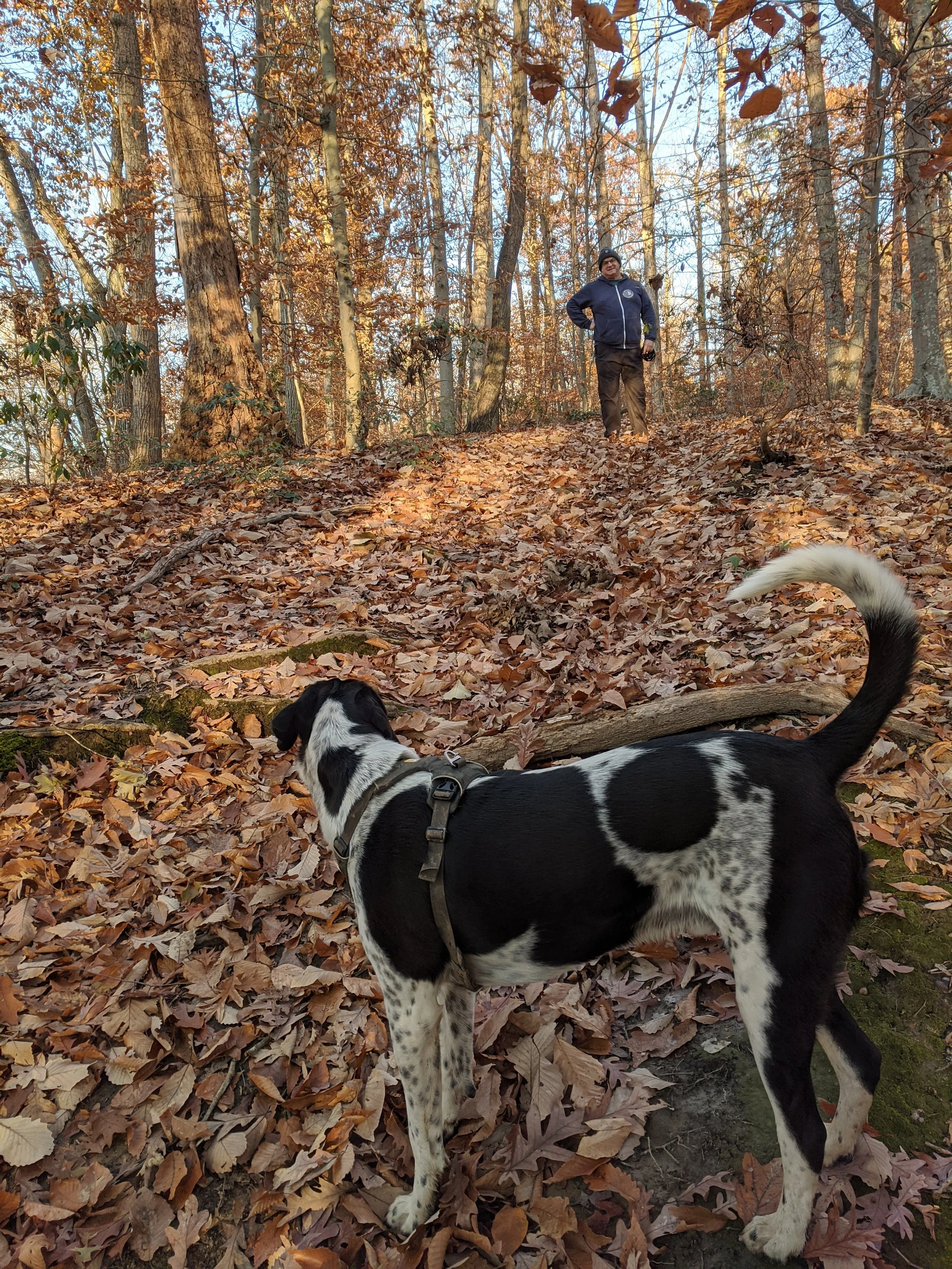
We still play games. Games are how we connect, how he problem-solves, how his bright mind stays bright. But we play his favorites now, at the pace his body and his mind say yes to. Sniffy walks where the agenda is set entirely by his nose. Puzzles that light up his brain without taxing his joints. Scent work, which asks so little of the body and gives so much to the spirit. The games that fill him up — chosen because they fill him up, not because they're impressive, not because they photograph well, but because his whole self leans into them.
The principle underneath it is simple, and it's one I'd offer to anyone loving an older dog: we ask less, and we offer more. Less performance, less pushing, less proving. More choice, more comfort, more of what he actually loves.
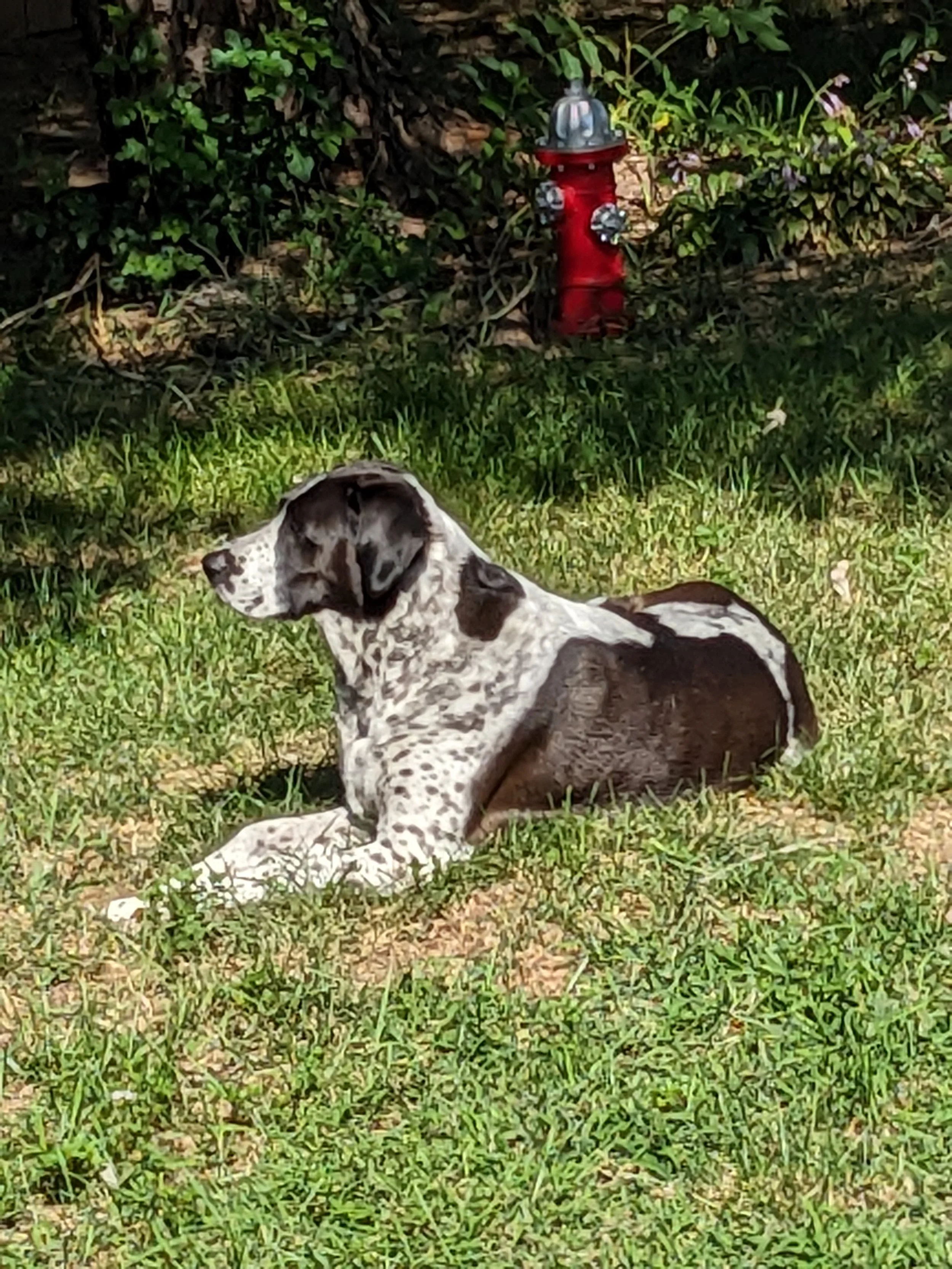
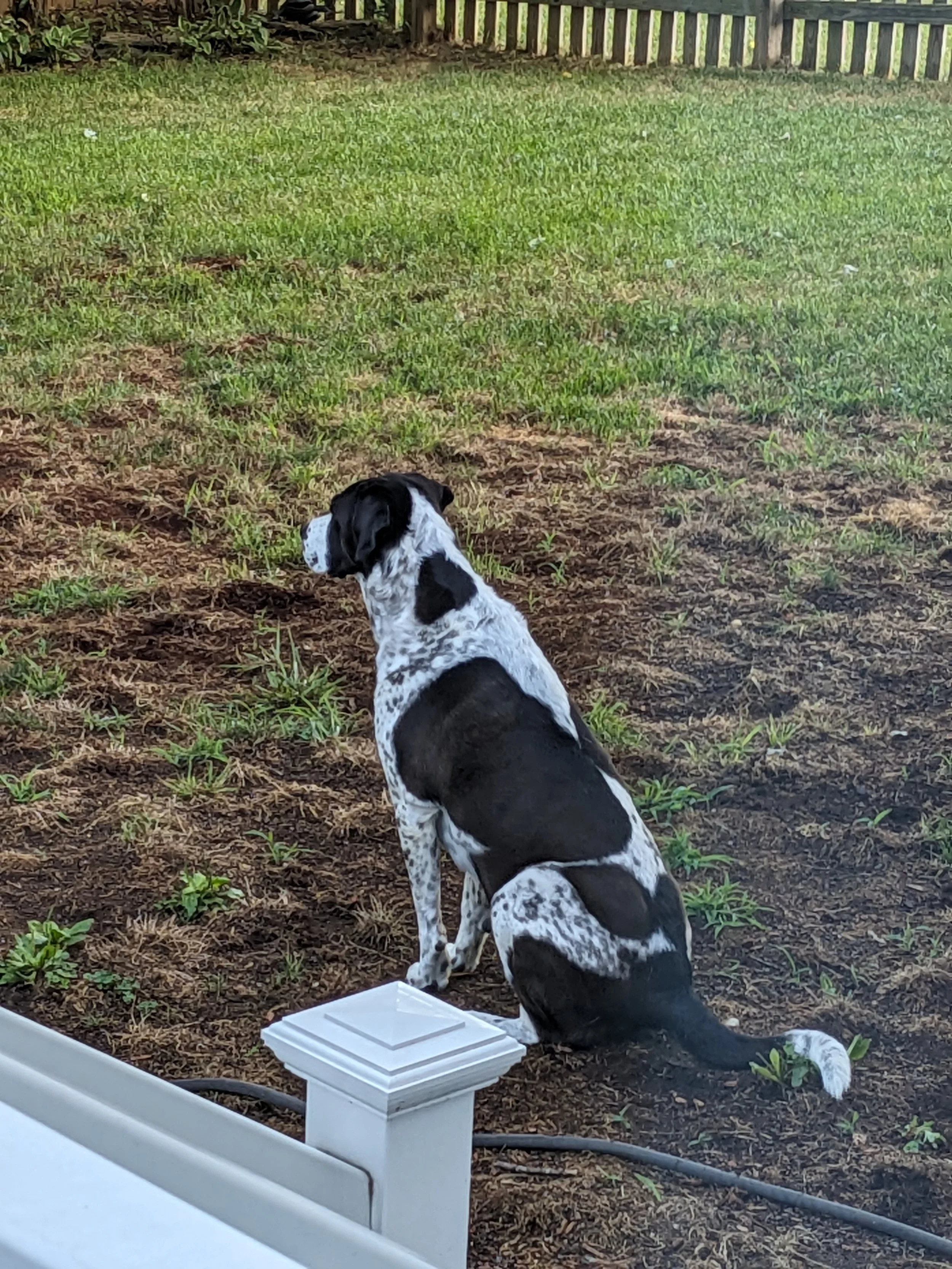
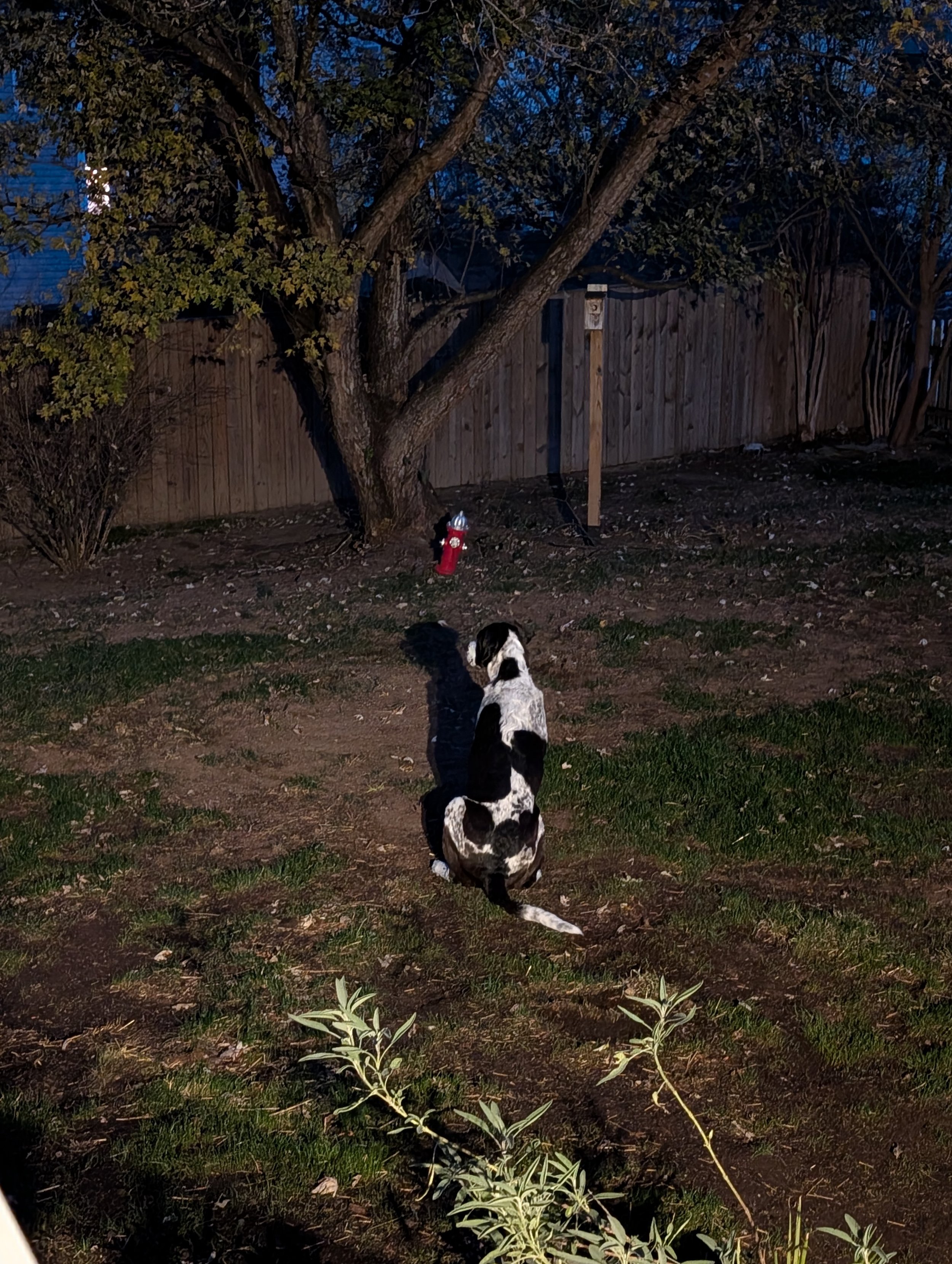
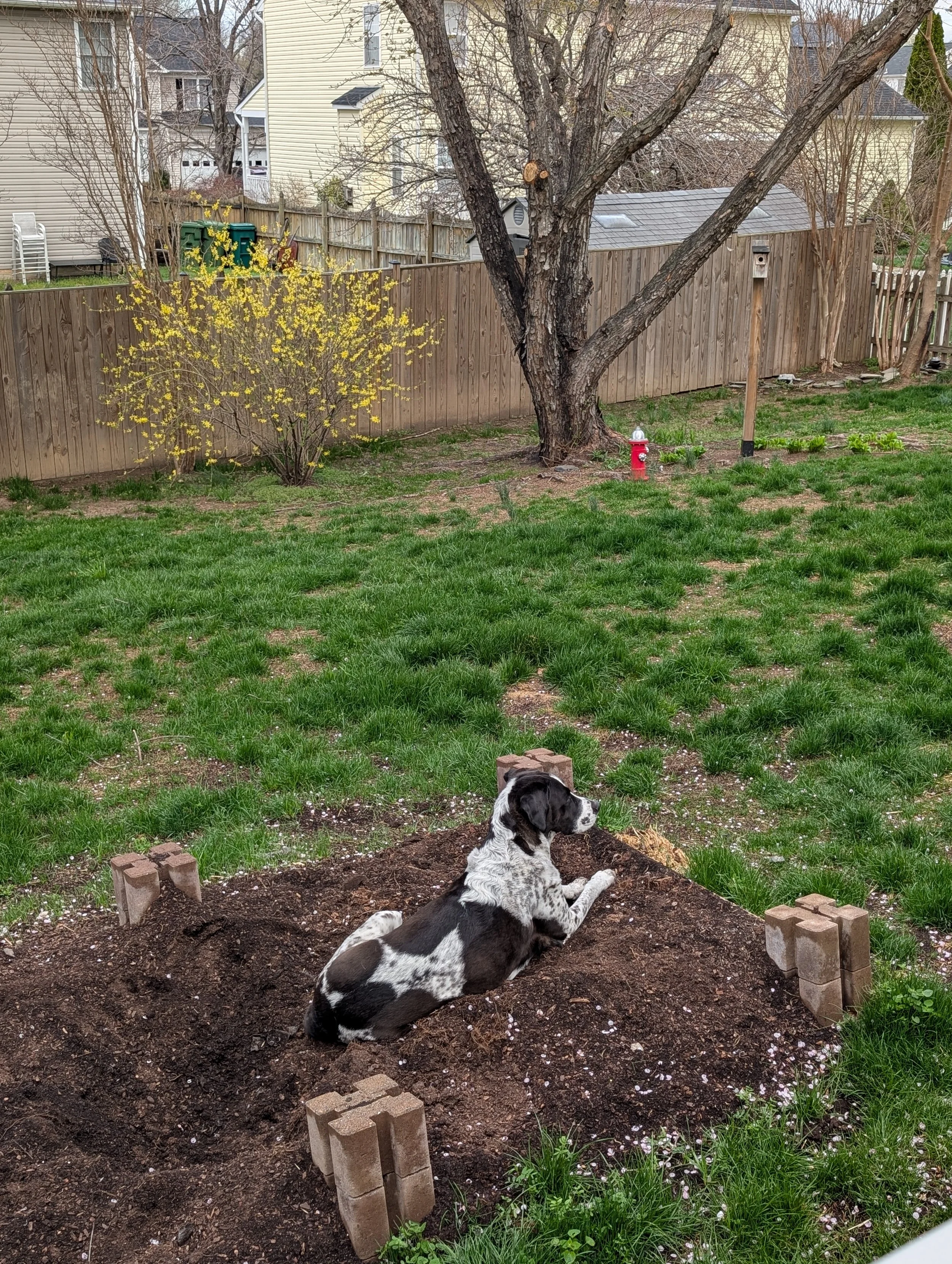
Where he finds his peace
Of all the places in Odin's reshaped world, there's one that matters most.
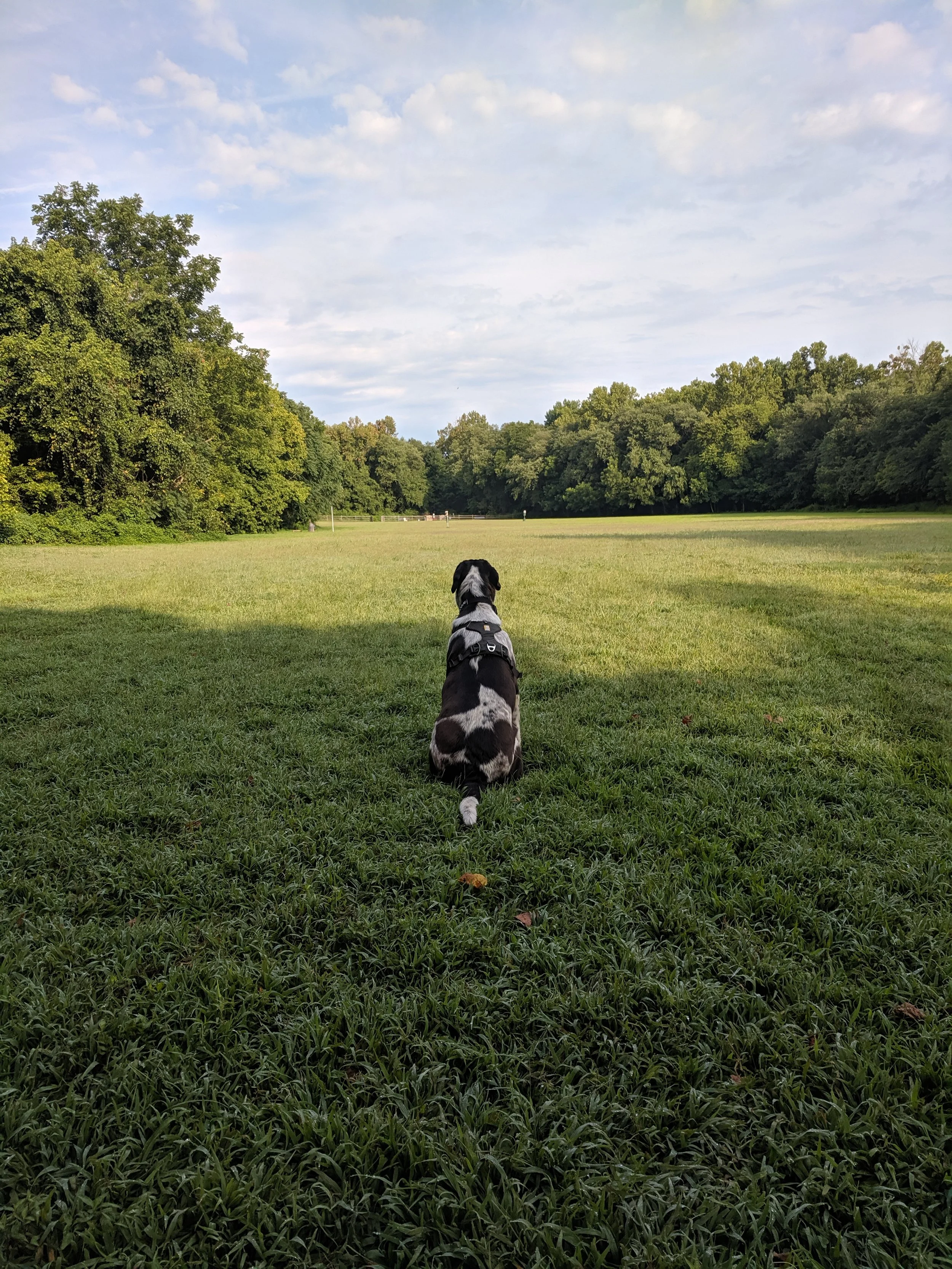
He finds his peace sitting in the garden out back. And I've made it a priority — a real, protected, non-negotiable priority — because of who he gets to be there. In the garden, he listens to the birds. He takes in the smells at his own pace, on his own time, with no agenda but his own curiosity. He rests in the dirt that grew so many tomatoes.
And in those moments, he is peaceful.
That's all I could ever hope for in the twilight of his life. Not to keep him young. Not to squeeze out one more trick or one more mile. Just this: a soft place, a slow afternoon, a body out of pain, a nose full of summer, and the quiet certainty that he is safe and known and loved.
What aging is teaching me
We're sold a story that the best days with a dog are the early ones — the zoomies, the first tricks, the boundless body. But these slower years with Odin are teaching me something the wild early days never could.
They're teaching me to watch instead of direct. To offer instead of demand. To find the profound inside the ordinary — a good rest, a long sniff, a soft floor, a body out of pain, a quiet hour in the garden. To love something precisely because it's fleeting, and to let that fleetingness make me more present, not more afraid.
Odin doesn't need me to keep him young. He needs me to meet him exactly where he is, with everything I've got. That's not a lesser kind of love. It might be the truest kind there is.
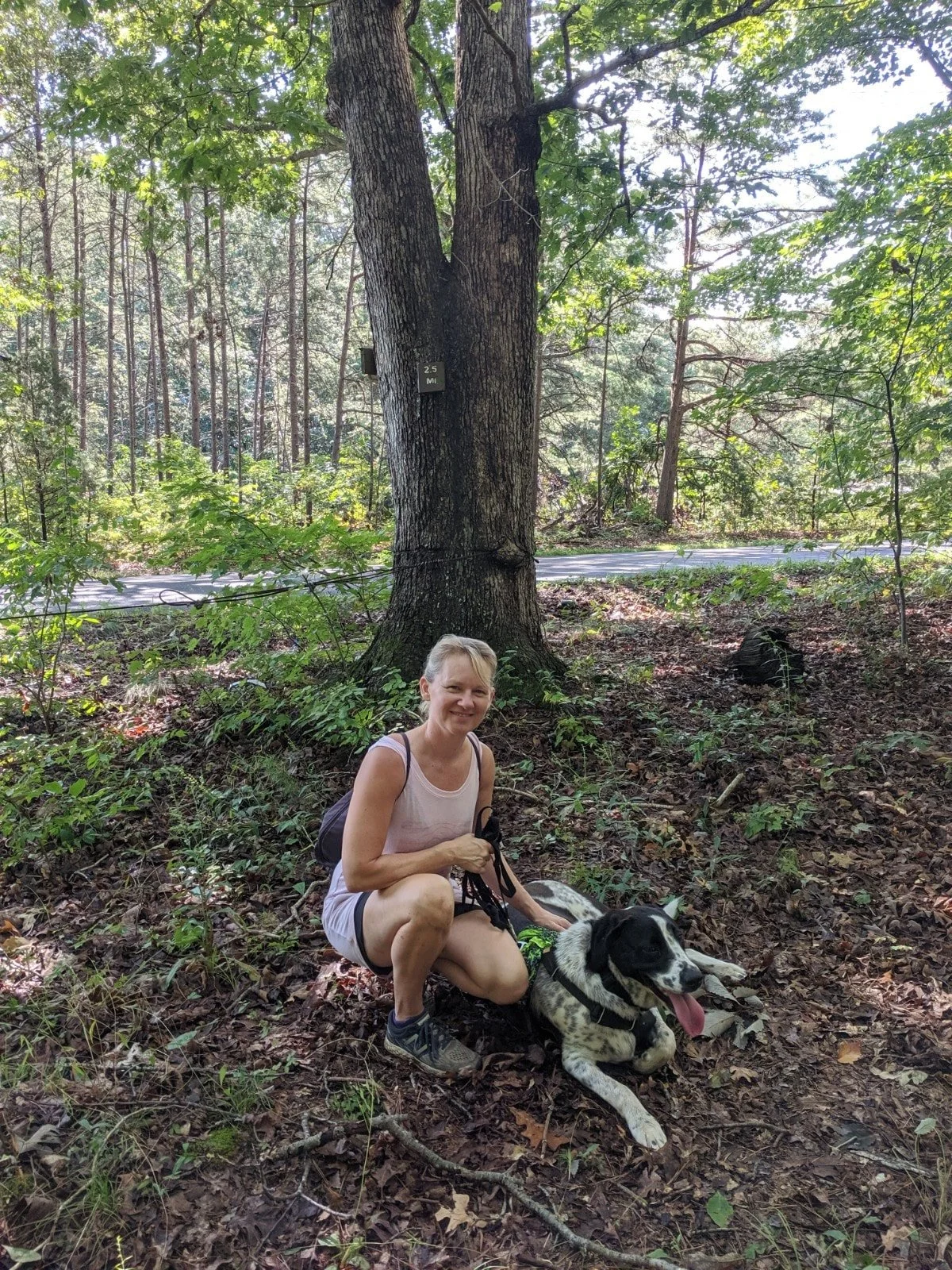
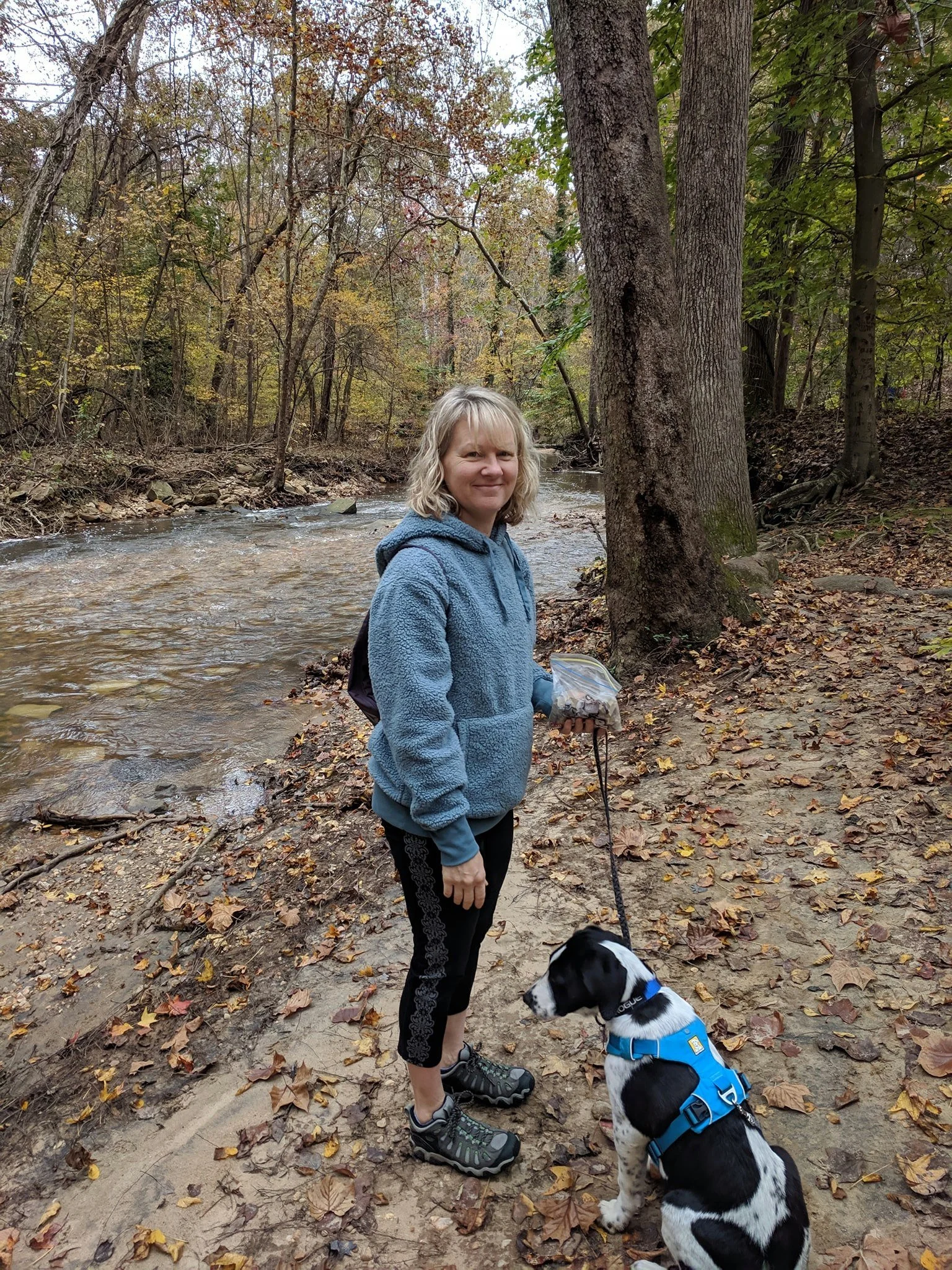
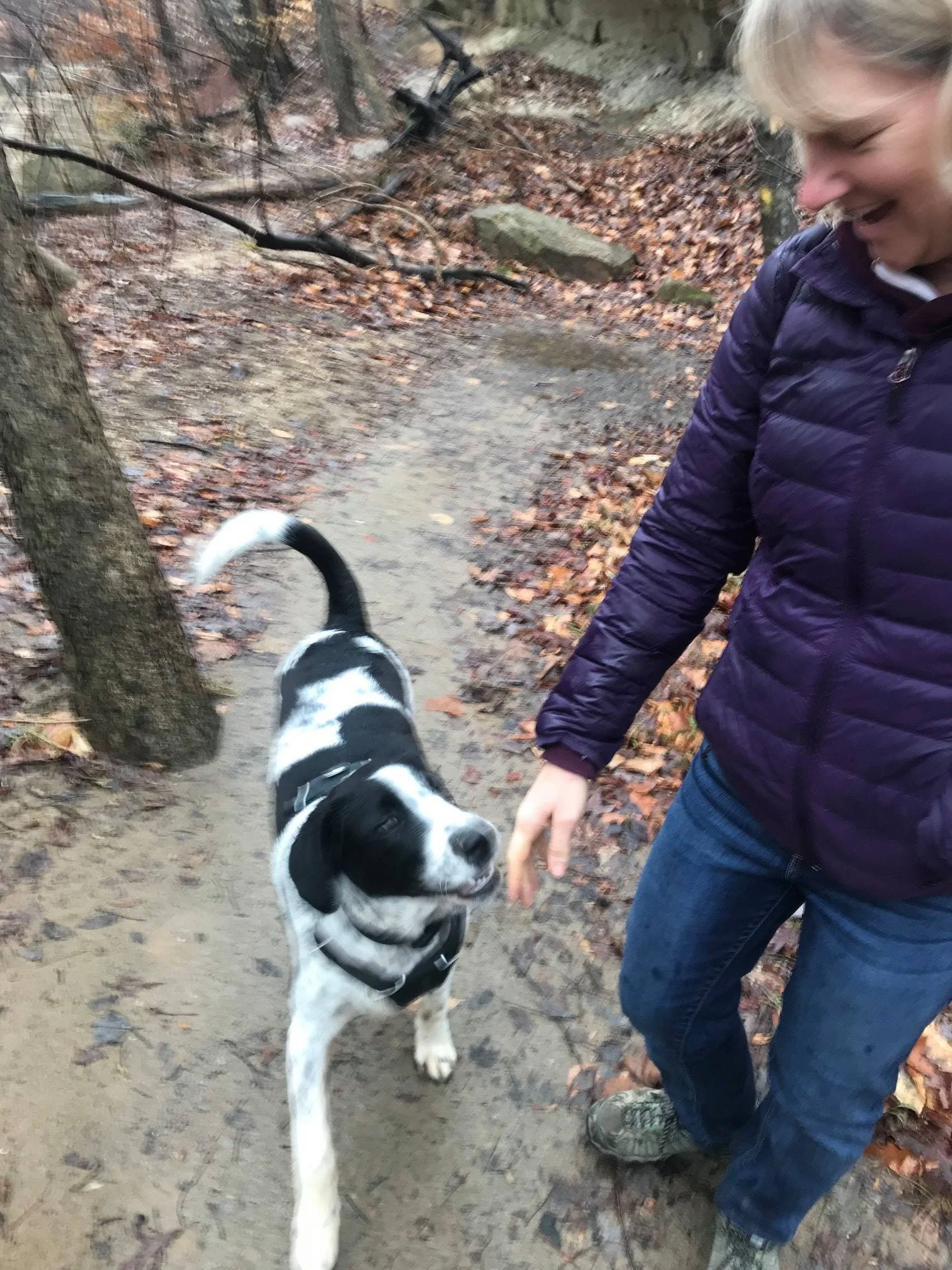
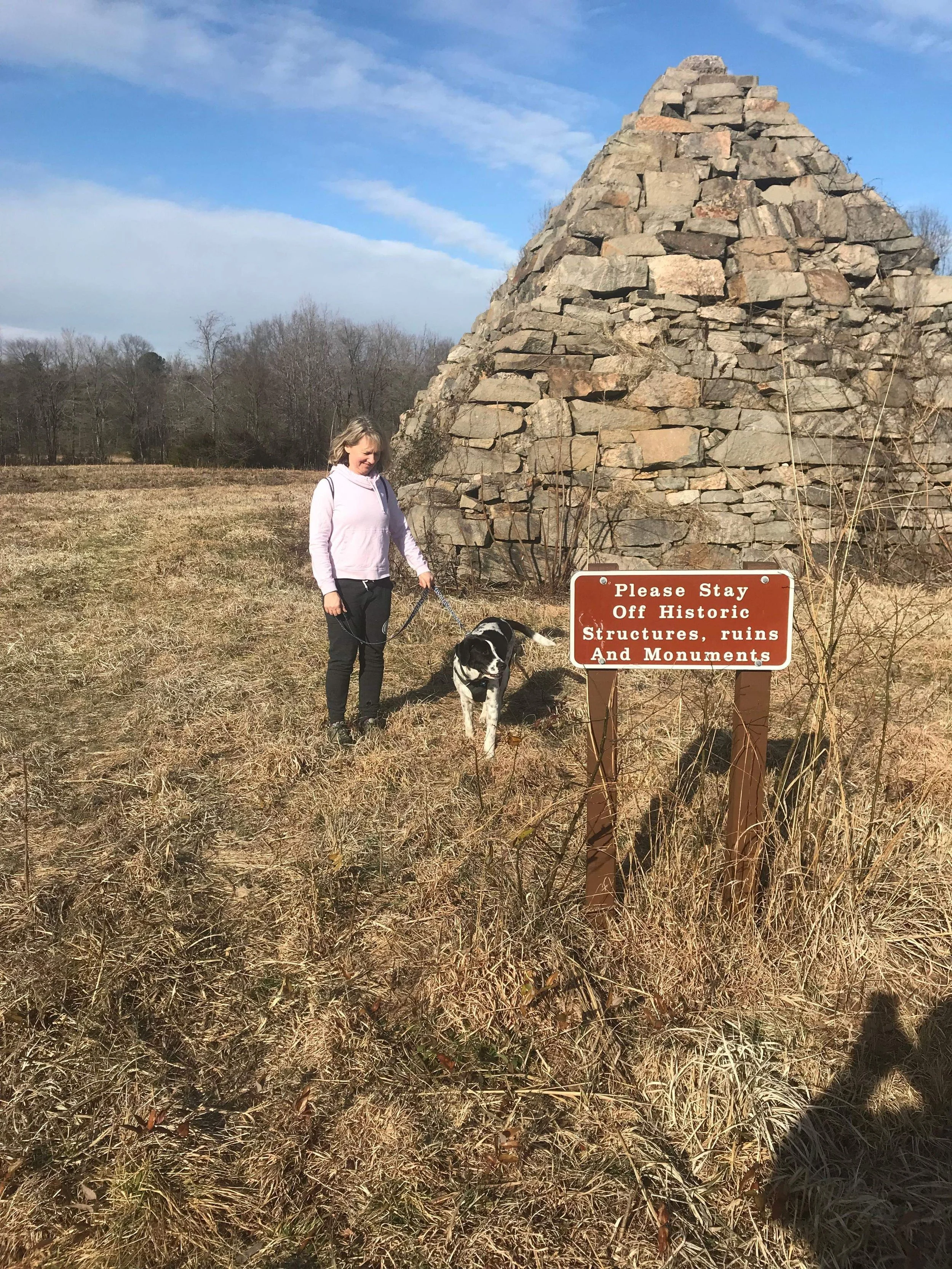
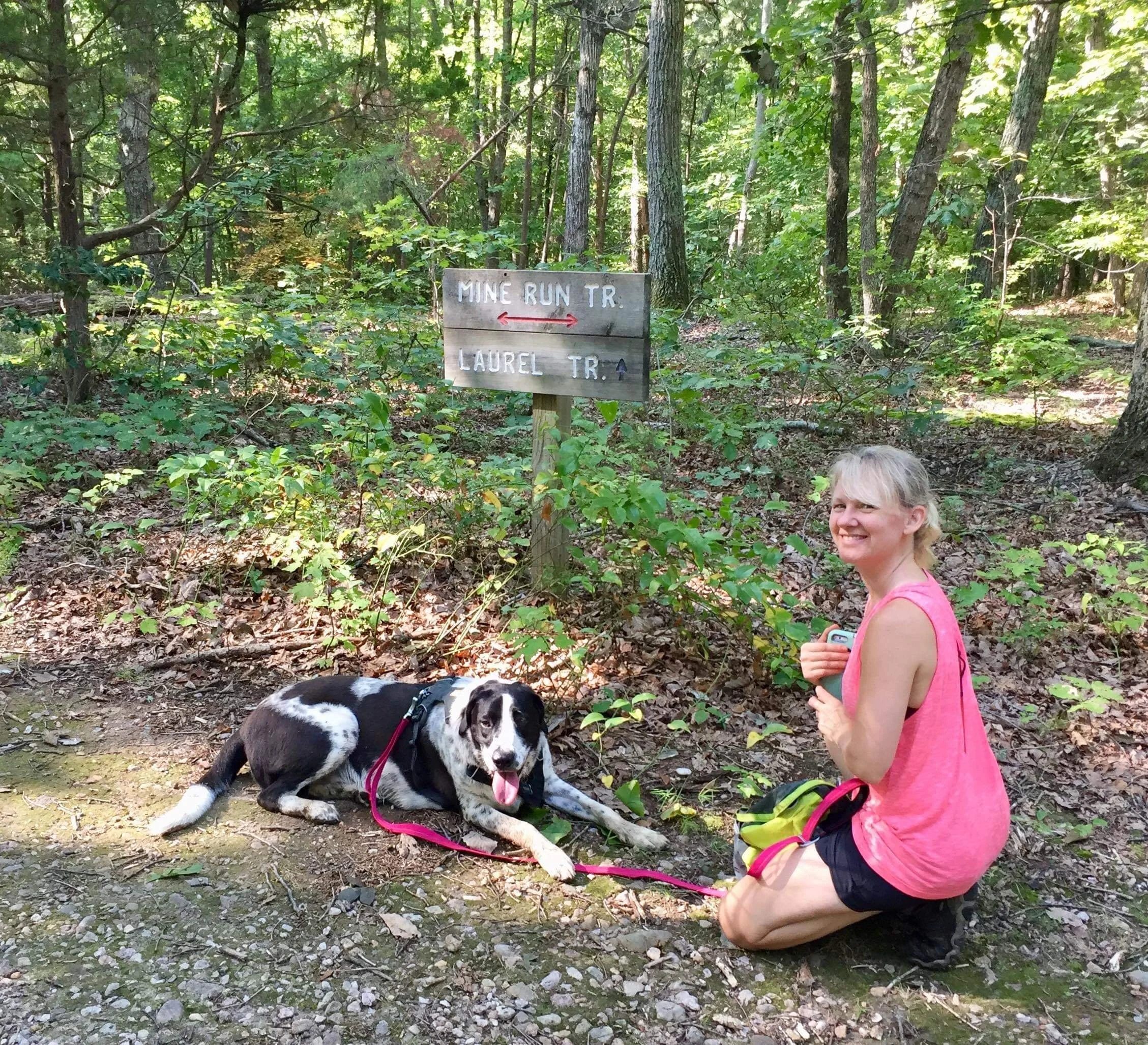
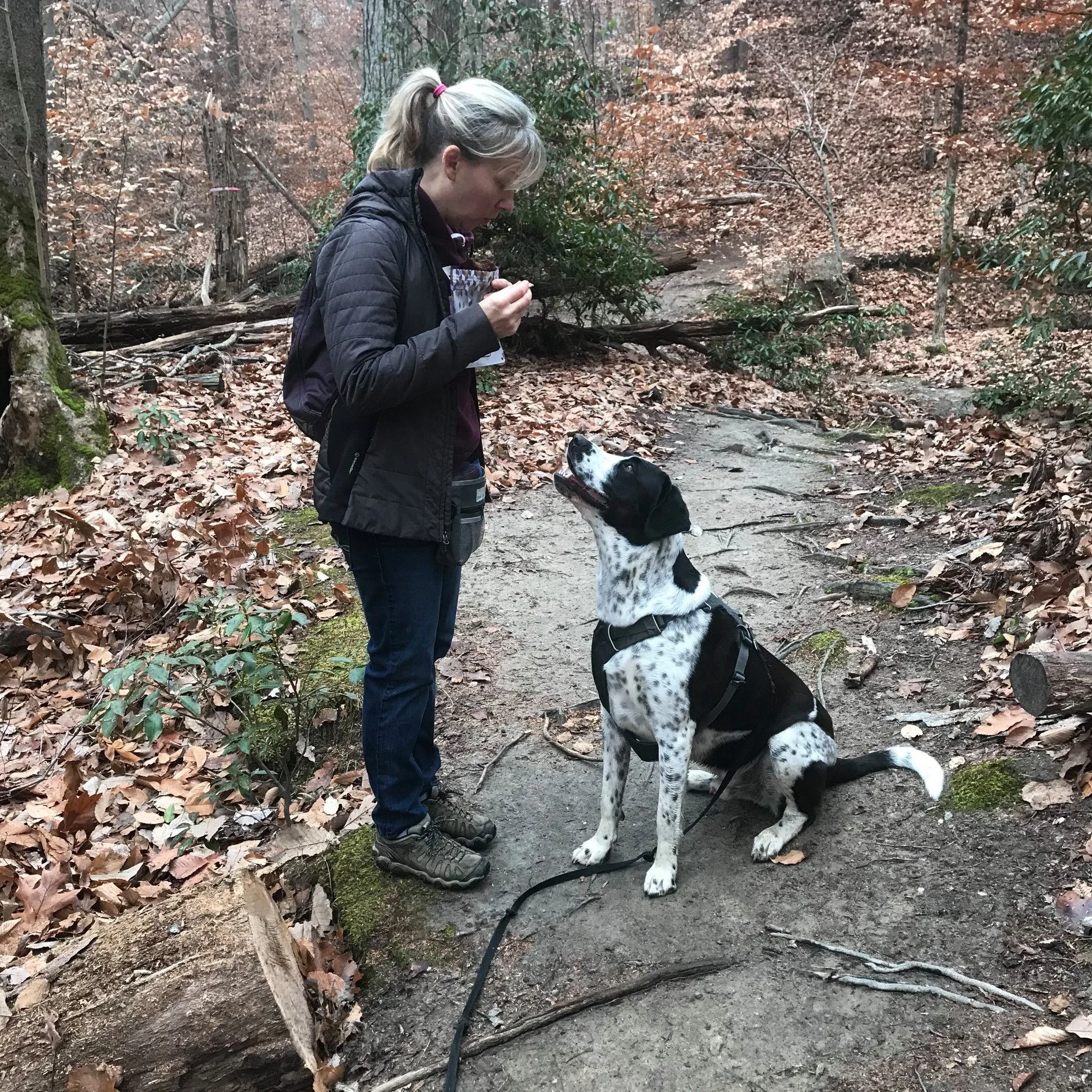
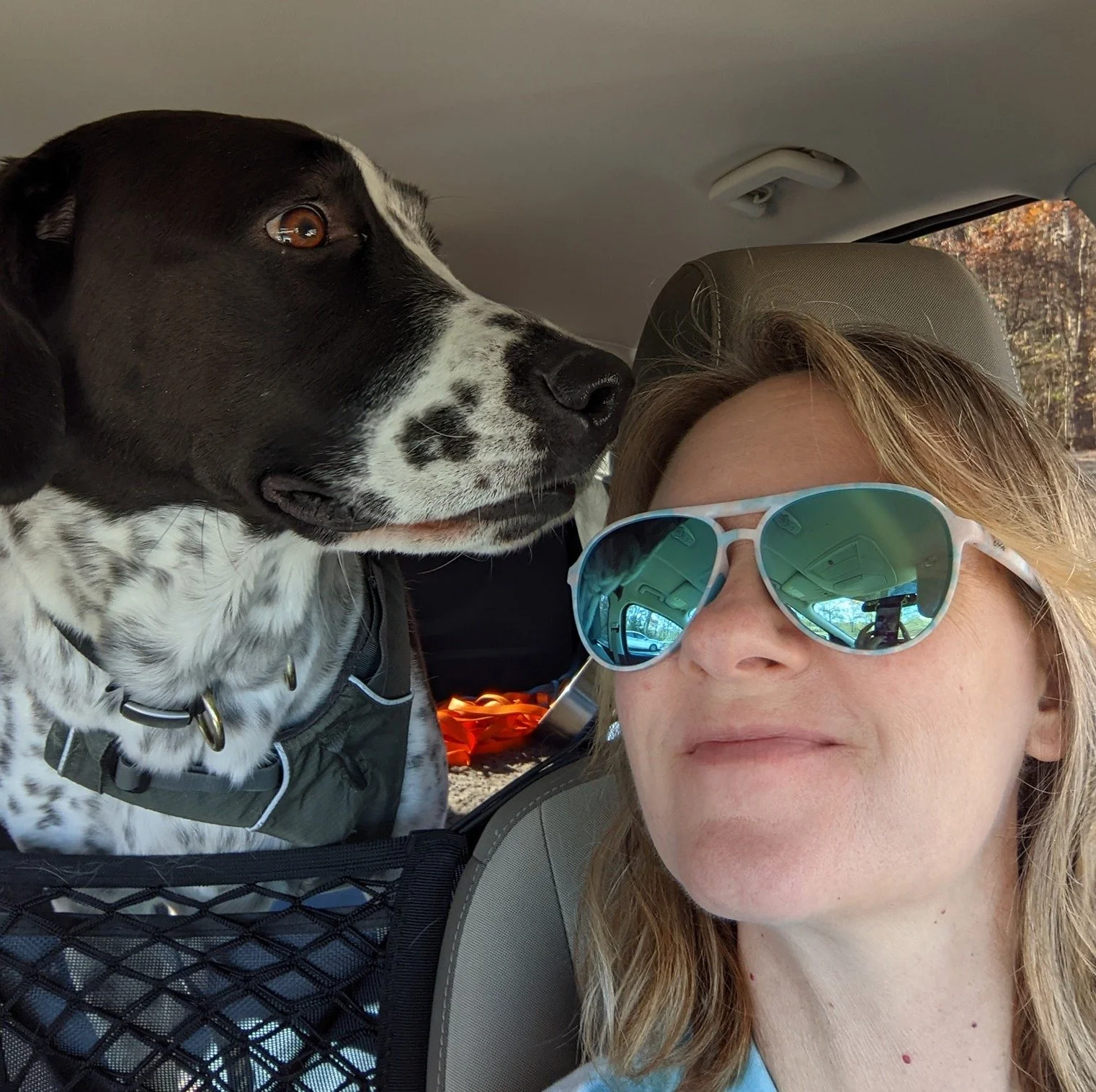
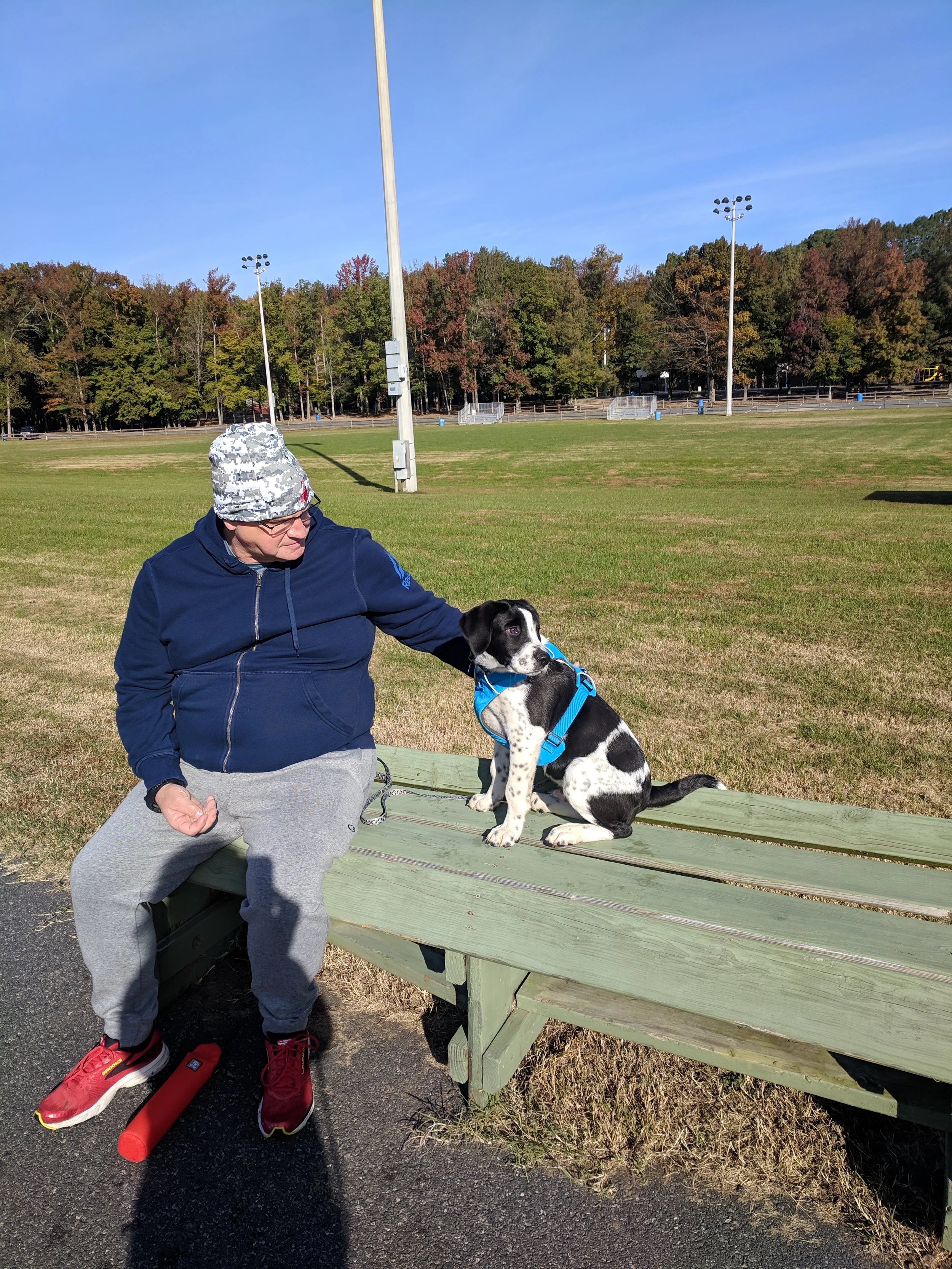
If you're loving an older dog and wondering whether you're doing enough — start with the environment. Make the floors trustworthy. Put a soft place to rest on every floor they use. Talk to your vet about pain, and treat new behavior as medical first. Carve out quiet. Use gates and space without guilt. Ask less, offer more. They've given us their whole lives. The least we can do is meet them gently in the part that's left.
🌀 @cooldogcrew | Compassion is our compass.