
The Skill Hiding in Your Dog's Bed: Why the Happiest Dogs Know How to Do Nothing
One of my students has recently found a whole new lease on life. After his family worked with their veterinarian to address some hidden discomfort, a dog who used to sleep most of the day is suddenly playful, energetic, and even a little bit of a chaos monkey. It is a joy to watch. And with all of that new energy has come something else: he now follows his mom around the house, hopeful, watchful, wondering if it might be time to train. Maybe now? How about now?
I love this so much. It means training has become one of the best parts of his day. But it also perfectly illustrates why, at Cool Dog Crew, we teach boundaries from the very first session. Not as an afterthought, not as a fix for a problem, but side by side with everything else, from day one.
Let me pull back the curtain, because none of this is magic, and I want you to understand exactly why we do what we do.
When we begin working with a dog, our first job is to build motivation and desire to engage with their person. We reward generously with food, toys, attention, and access to the things the dog loves. And something wonderful happens: the dog becomes what trainers call operant. An operant dog has learned that their choices makes good things happen. They stop waiting for life to happen to them and start experimenting, offering, trying things. They become an active participant in their own learning. It is the difference between a dog who watches the human vending machine and a dog who has figured out where the buttons are.
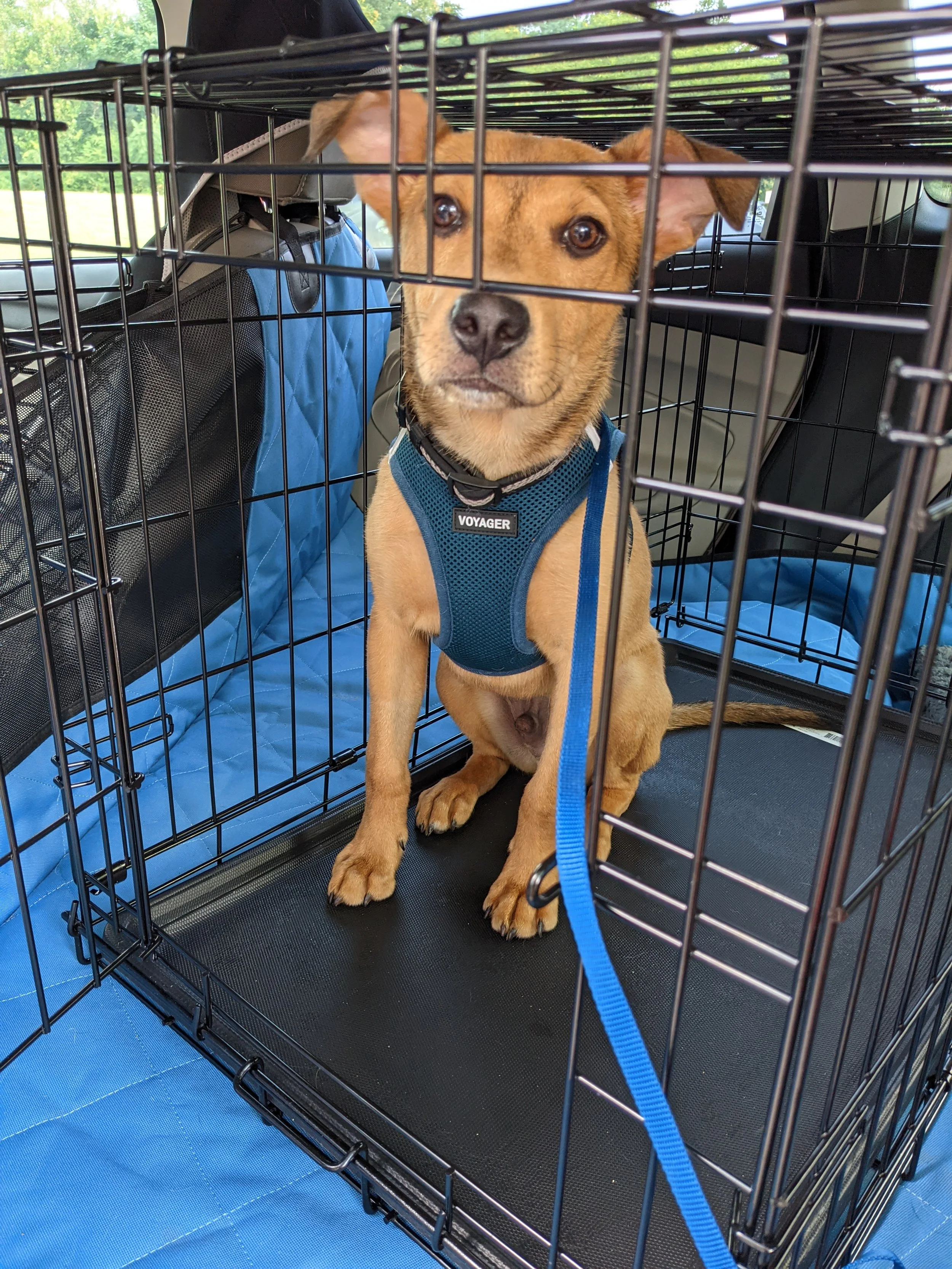
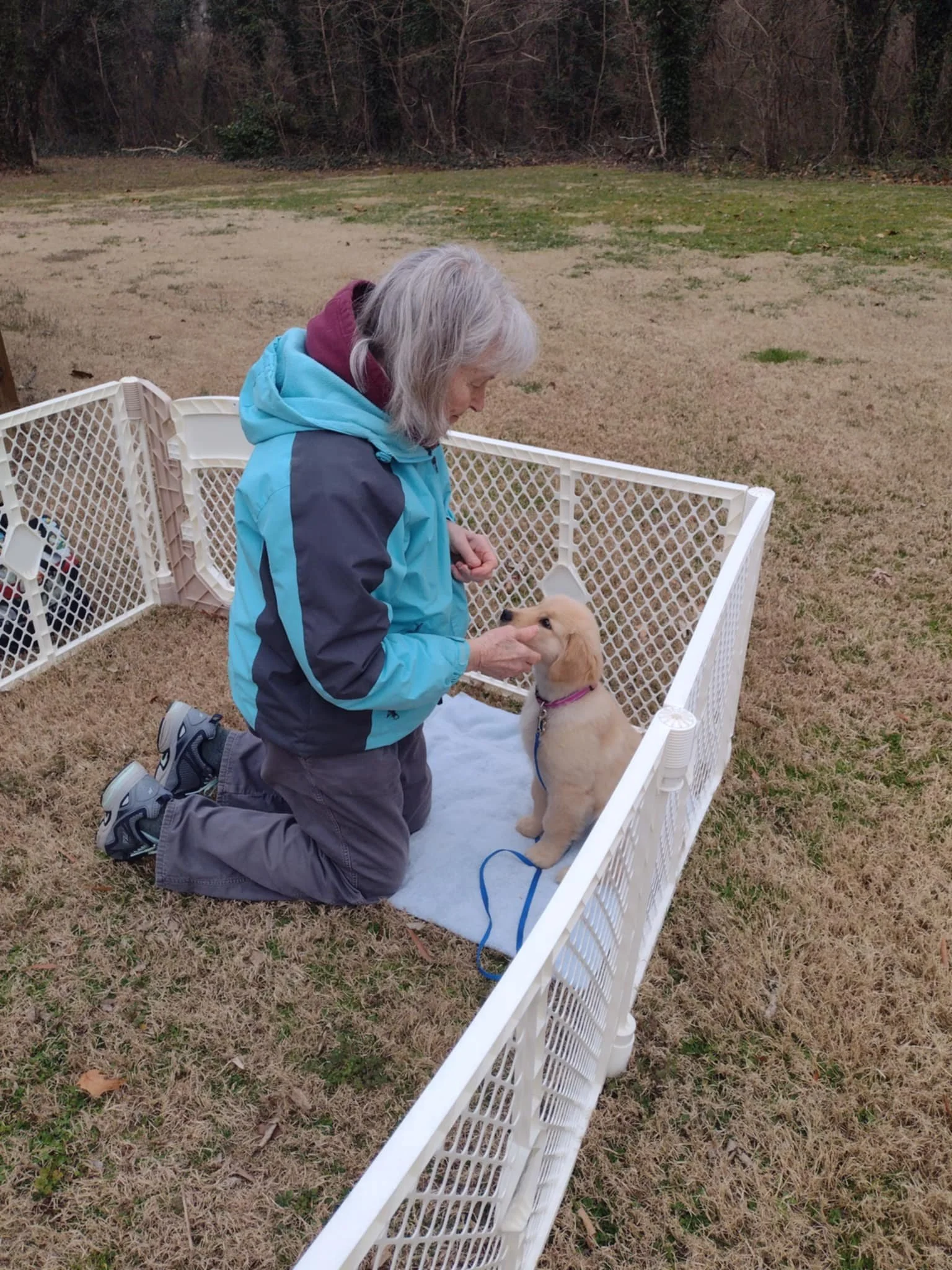
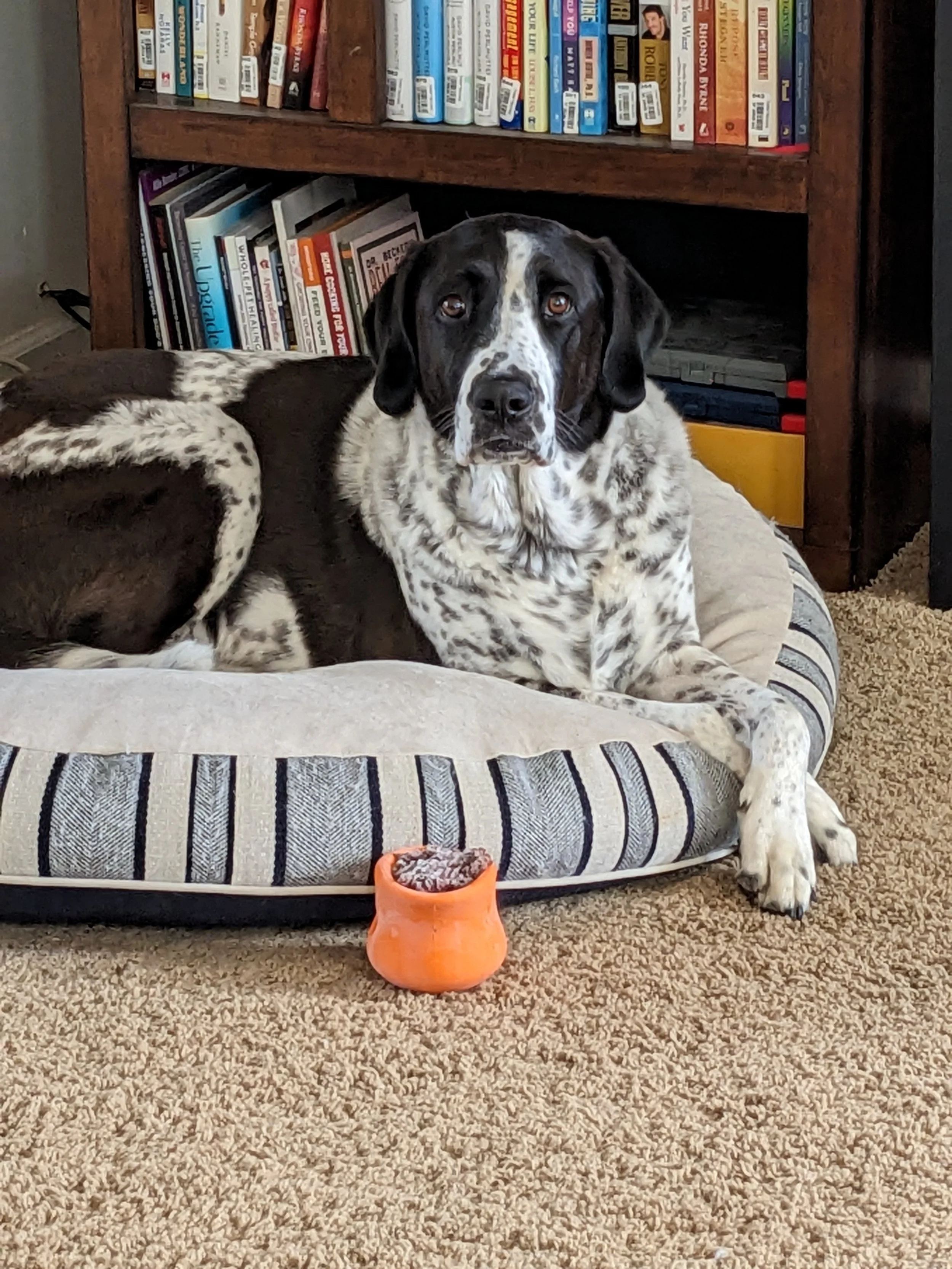
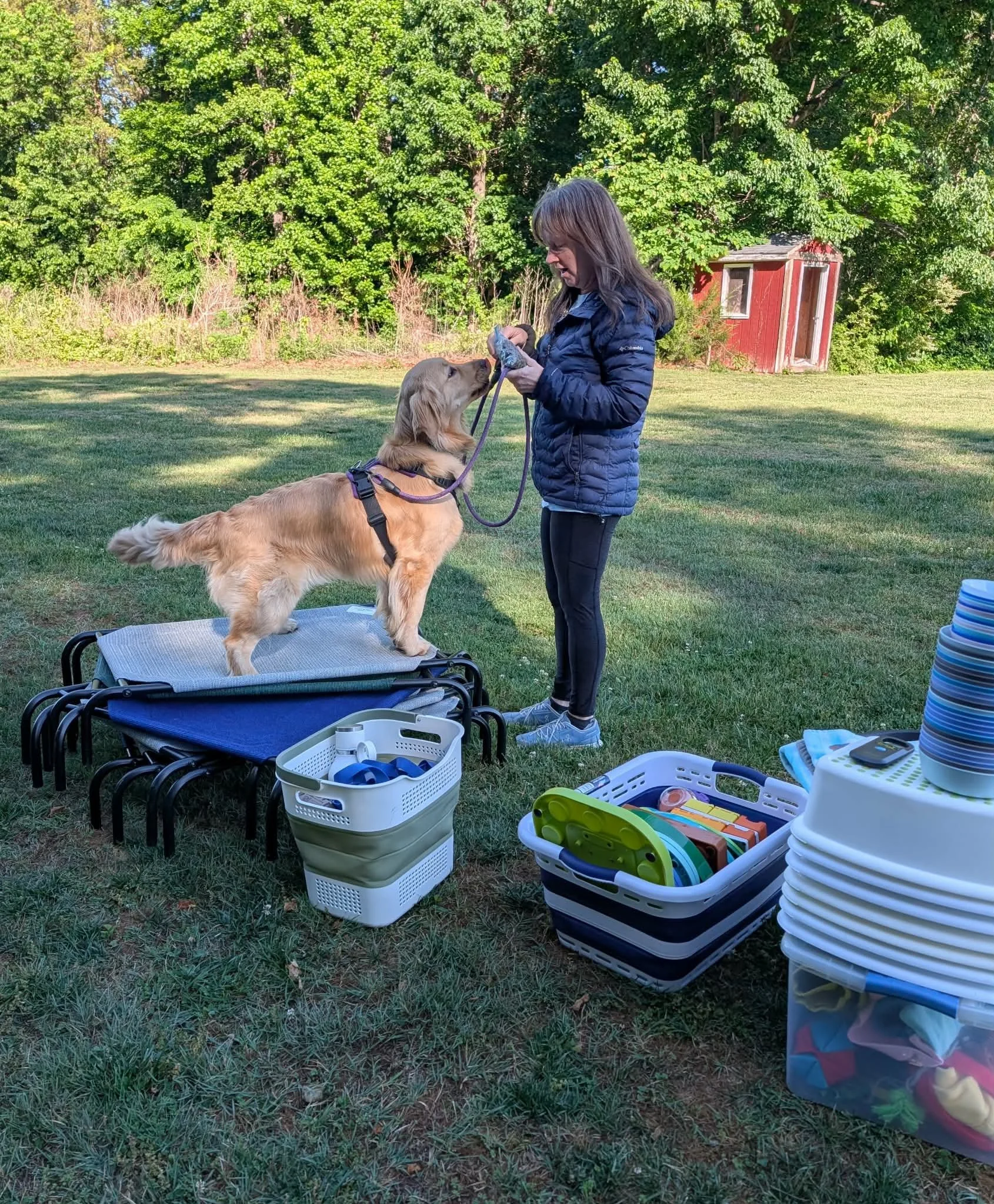
This is exactly what we want. An operant dog is a confident, engaged, empowered dog. But there is a flip side. A dog who has discovered that engaging with you pays off may start looking for opportunities everywhere. Following you from room to room. Offering behaviors at the kitchen counter. Hovering, hopeful, ready. That newly awakened brain needs something else to be complete, and that something is calmness.
This is where the boundary comes in.
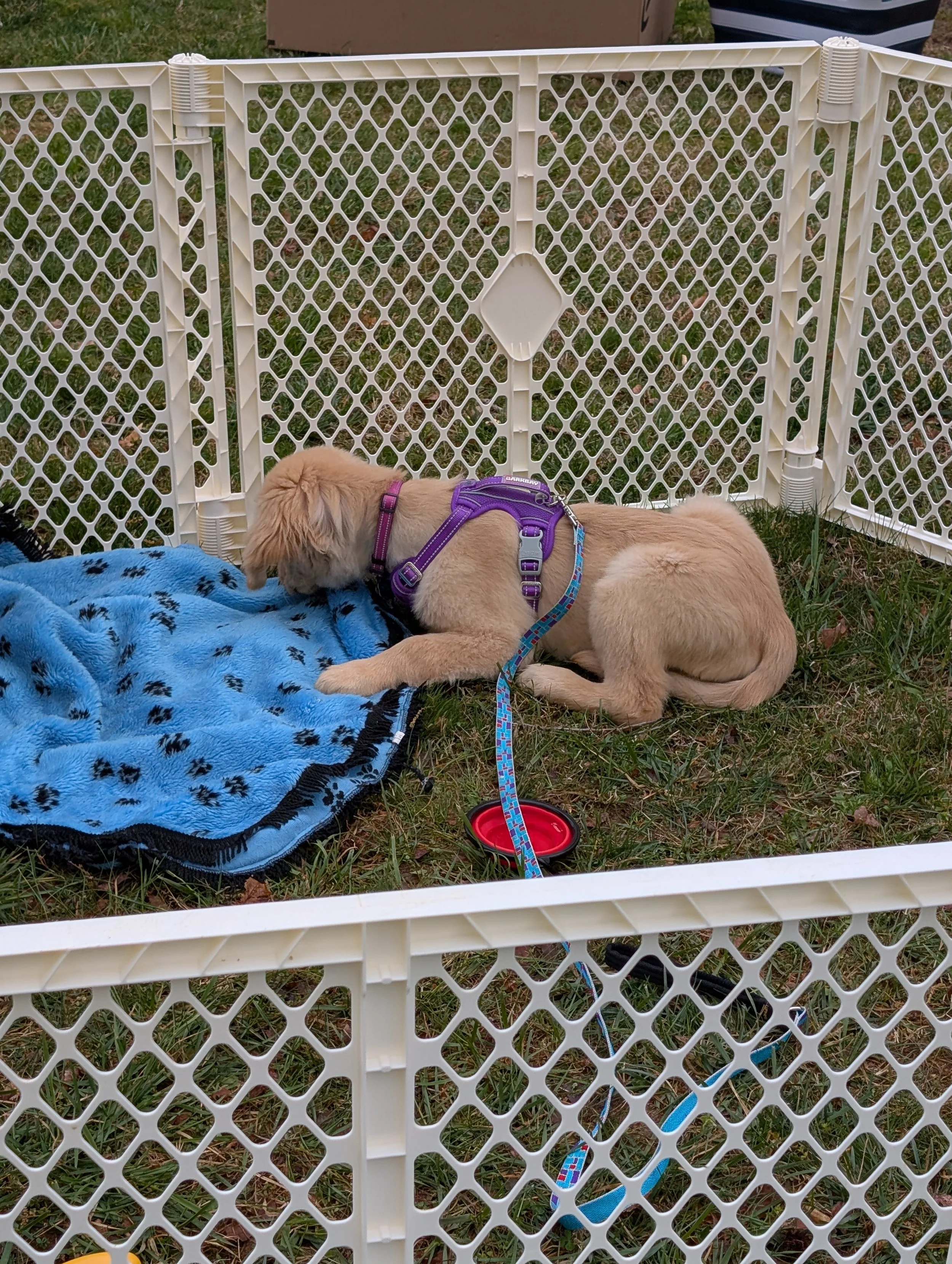
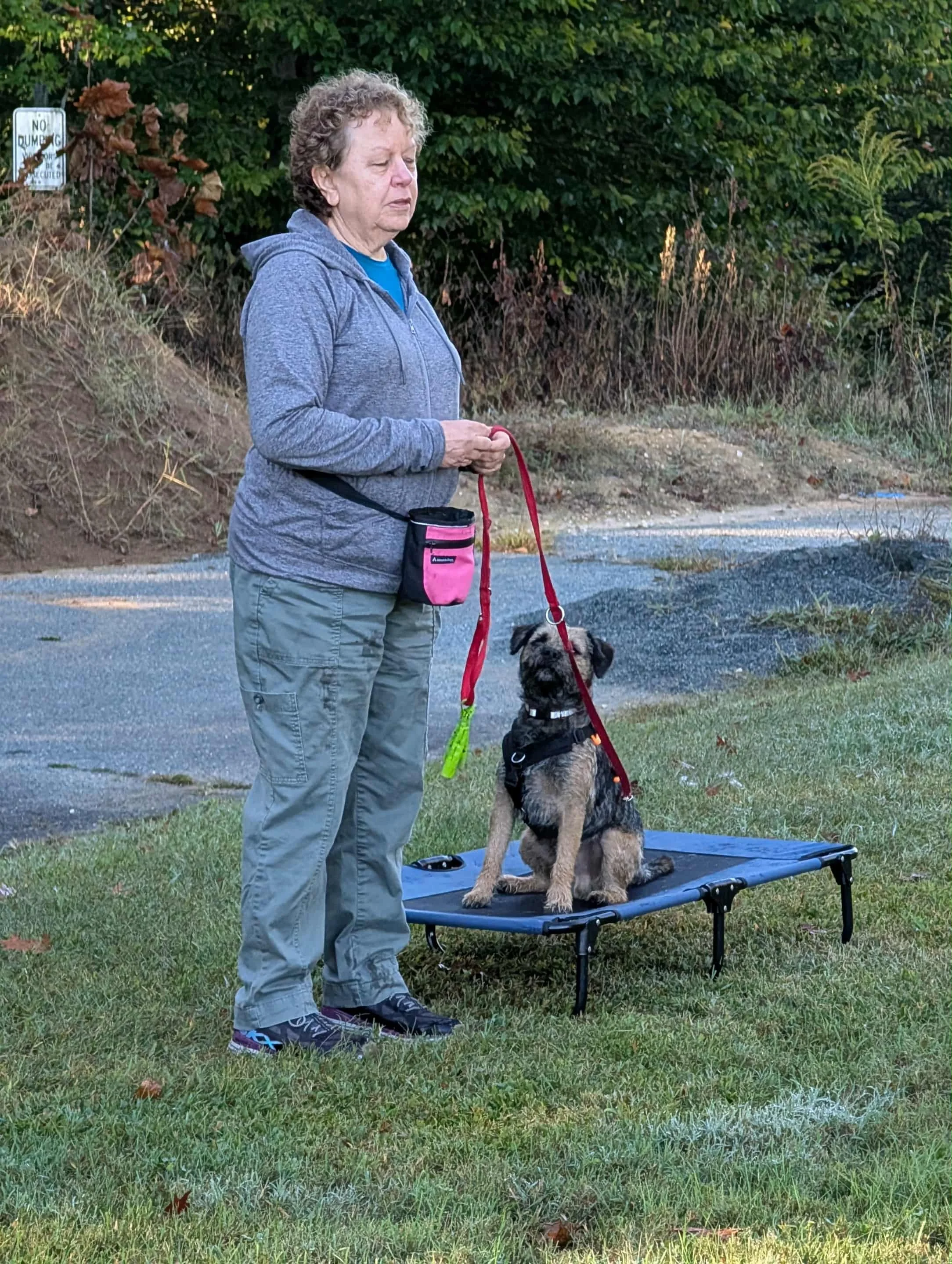
A boundary is simply a bed, a mat, a raised cot, any defined place that belongs to your dog. And from the very beginning, we make that place valuable. During New to the Crew, our onboarding program, dogs begin receiving treats on their boundary in the very first sessions. Nothing is asked of them. They simply learn that being there is a happy thing, that pieces of kibble often appear when they engage in any way with the boundary, including just sniffing. The boundary becomes a place where good things happen, not a place they are sent.
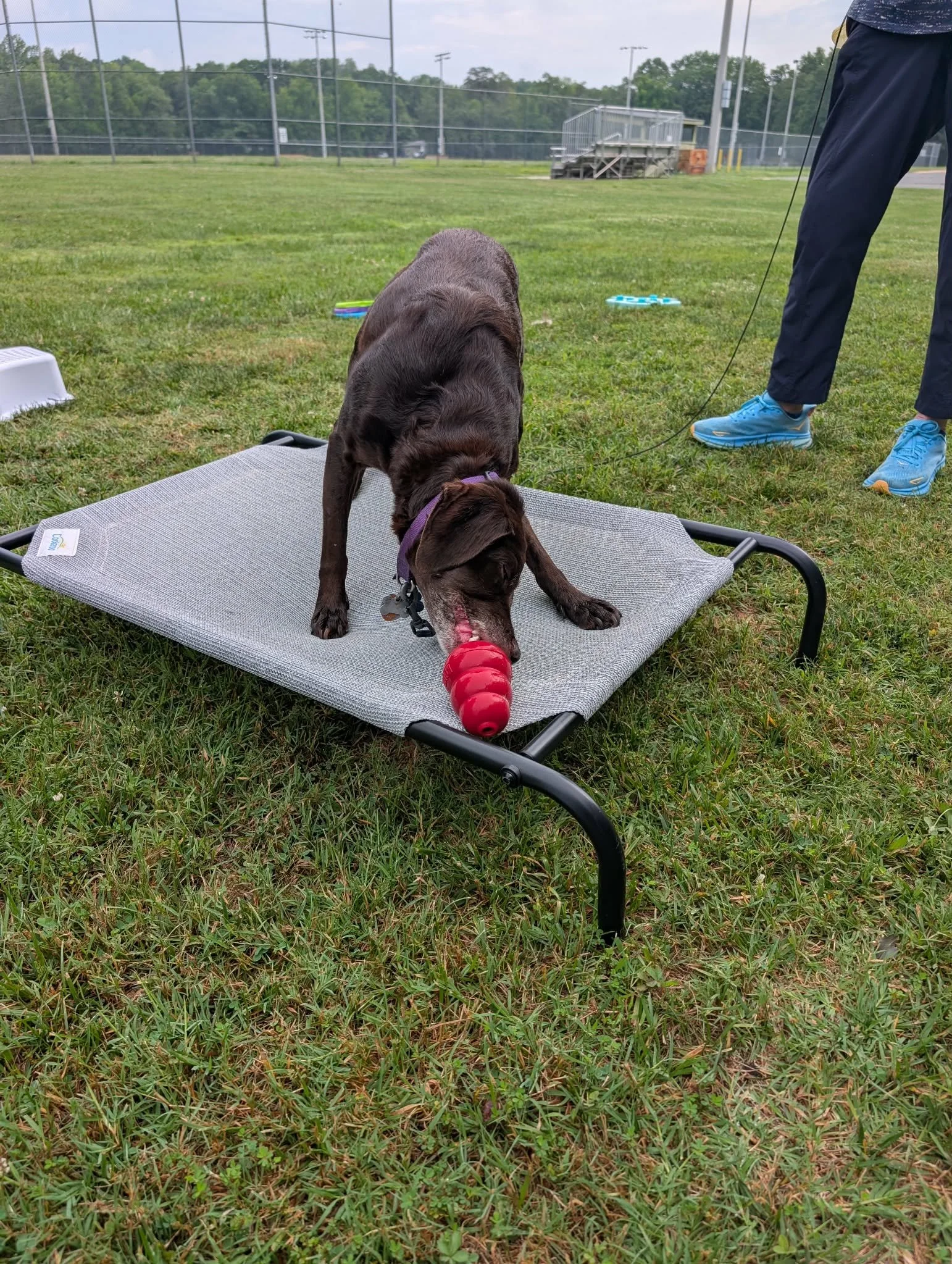
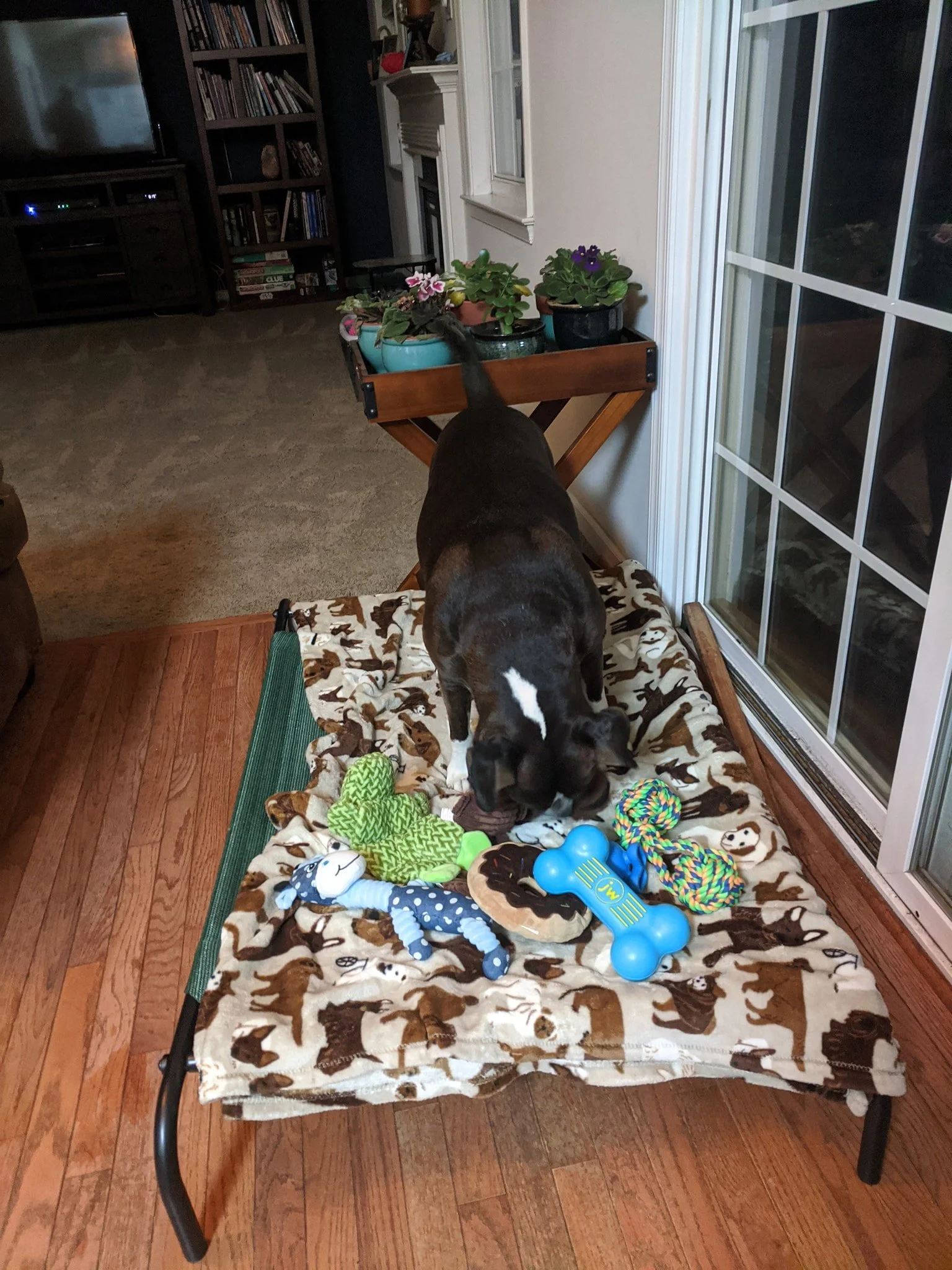
And if a dog begins class feeling unsure? We make it even easier. They simply discover treats waiting on the boundary, or a snuffle mat full of good things. If they happen to hop on, treats rain from the sky. In the beginning, we never lure or cue the boundary. We just quietly make it more and more valuable in the dog's own experience. I encourage mom and dad to do the same at home: all the chews, the Kongs, the special treats appear on the boundary. The dog is not required to stay there or do anything special. In fact, it is even better when something amazing shows up on their bed while they are not even in the room. Can you imagine how well a dog remembers that?
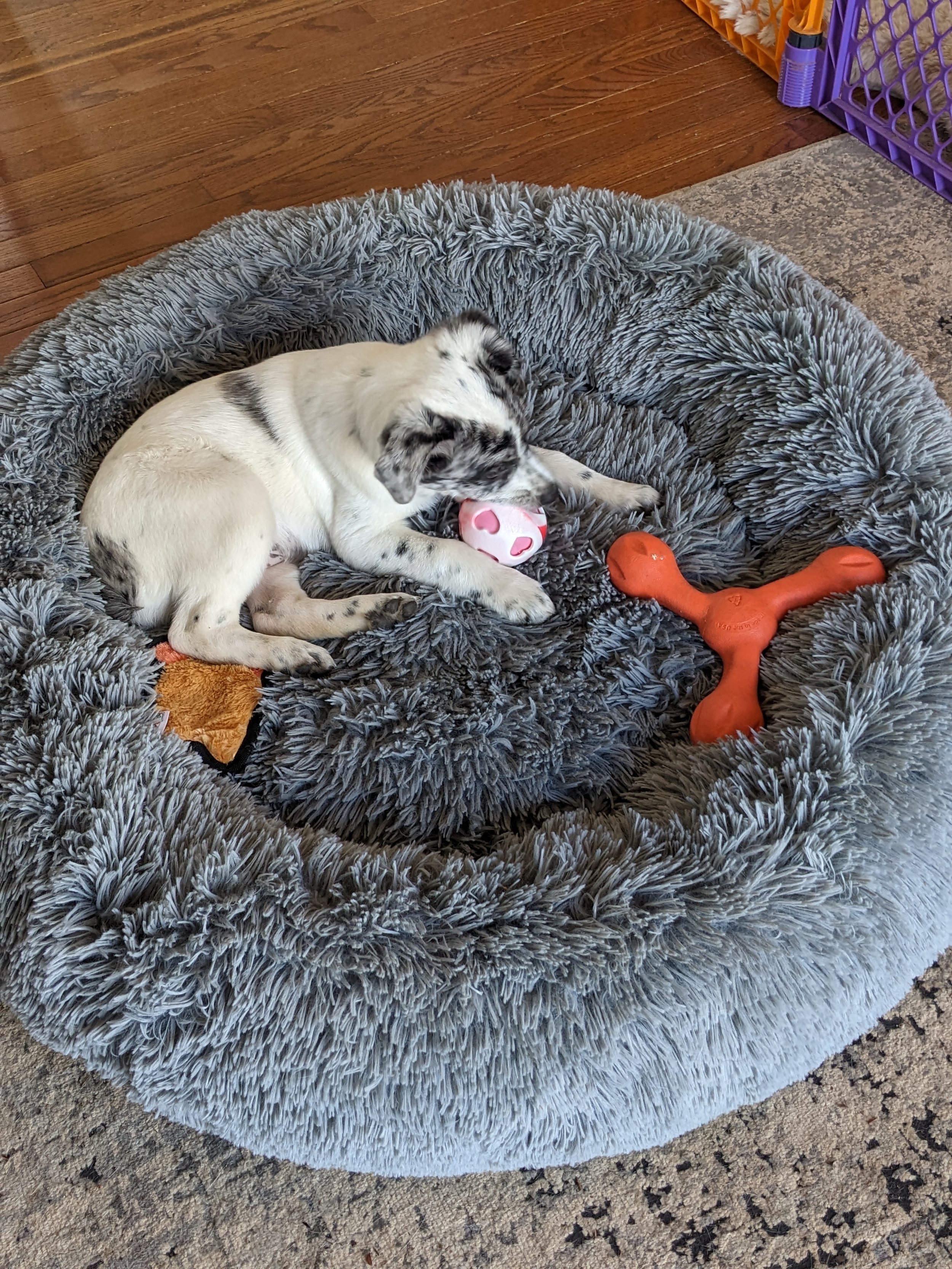
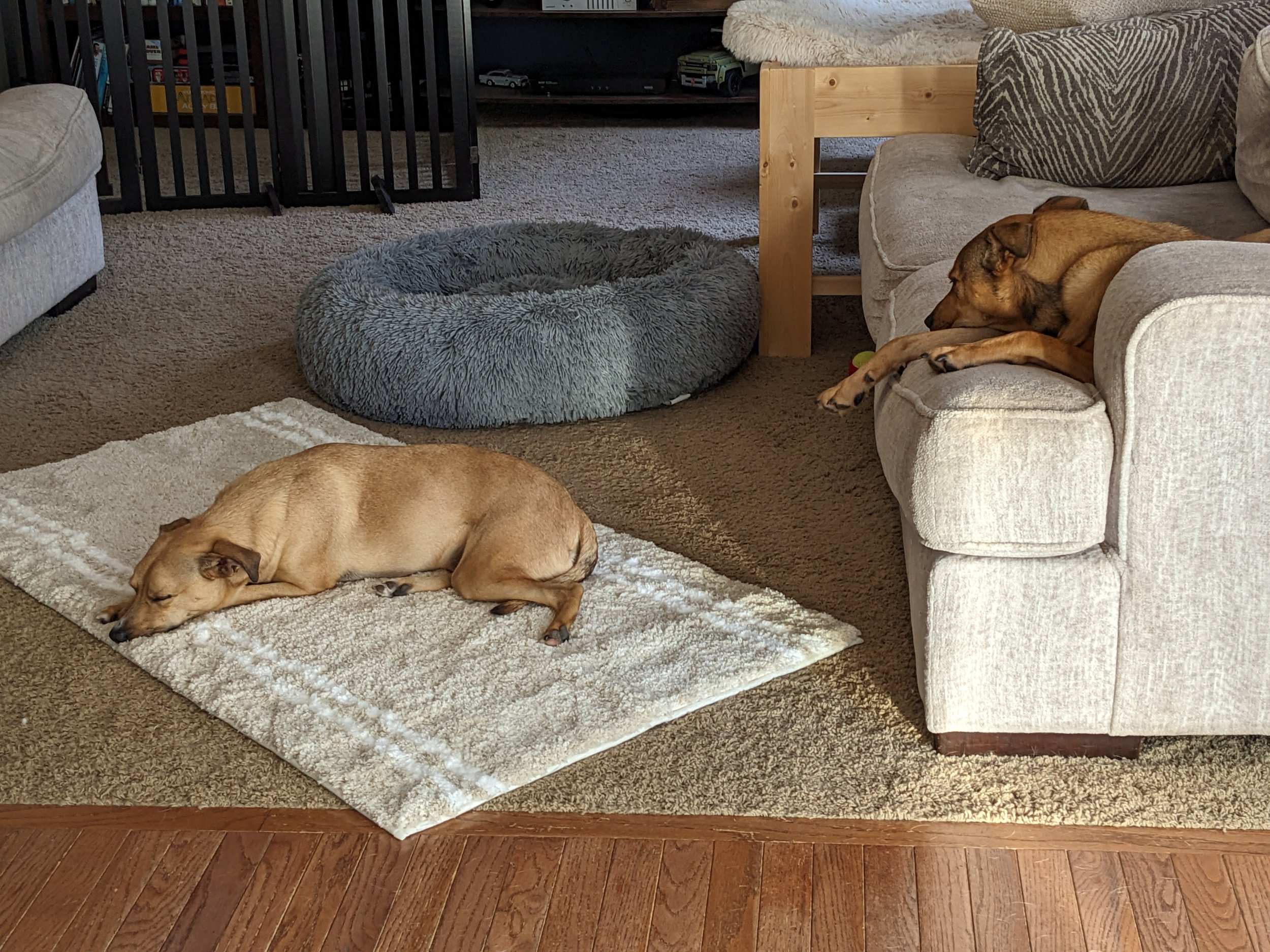
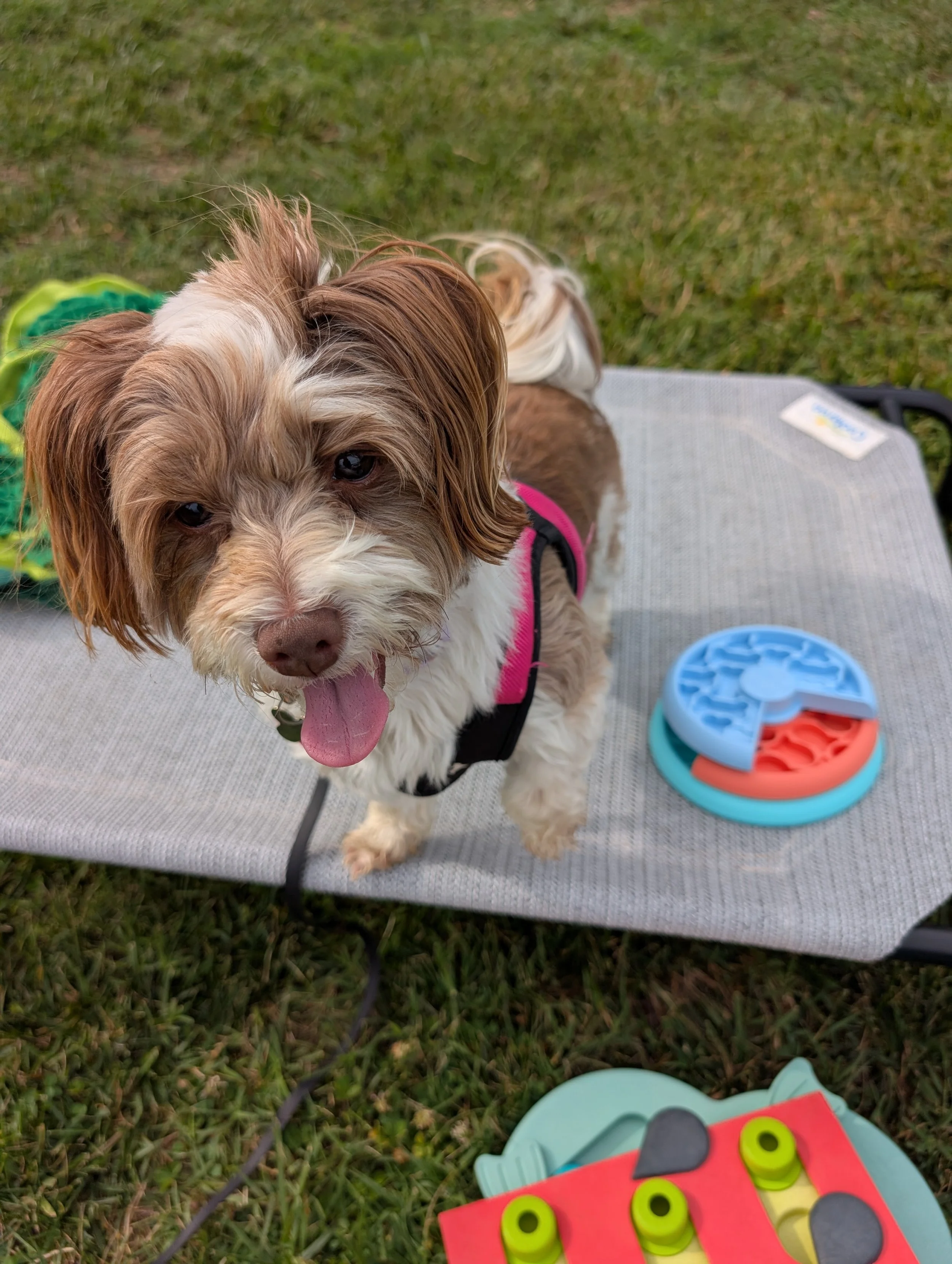
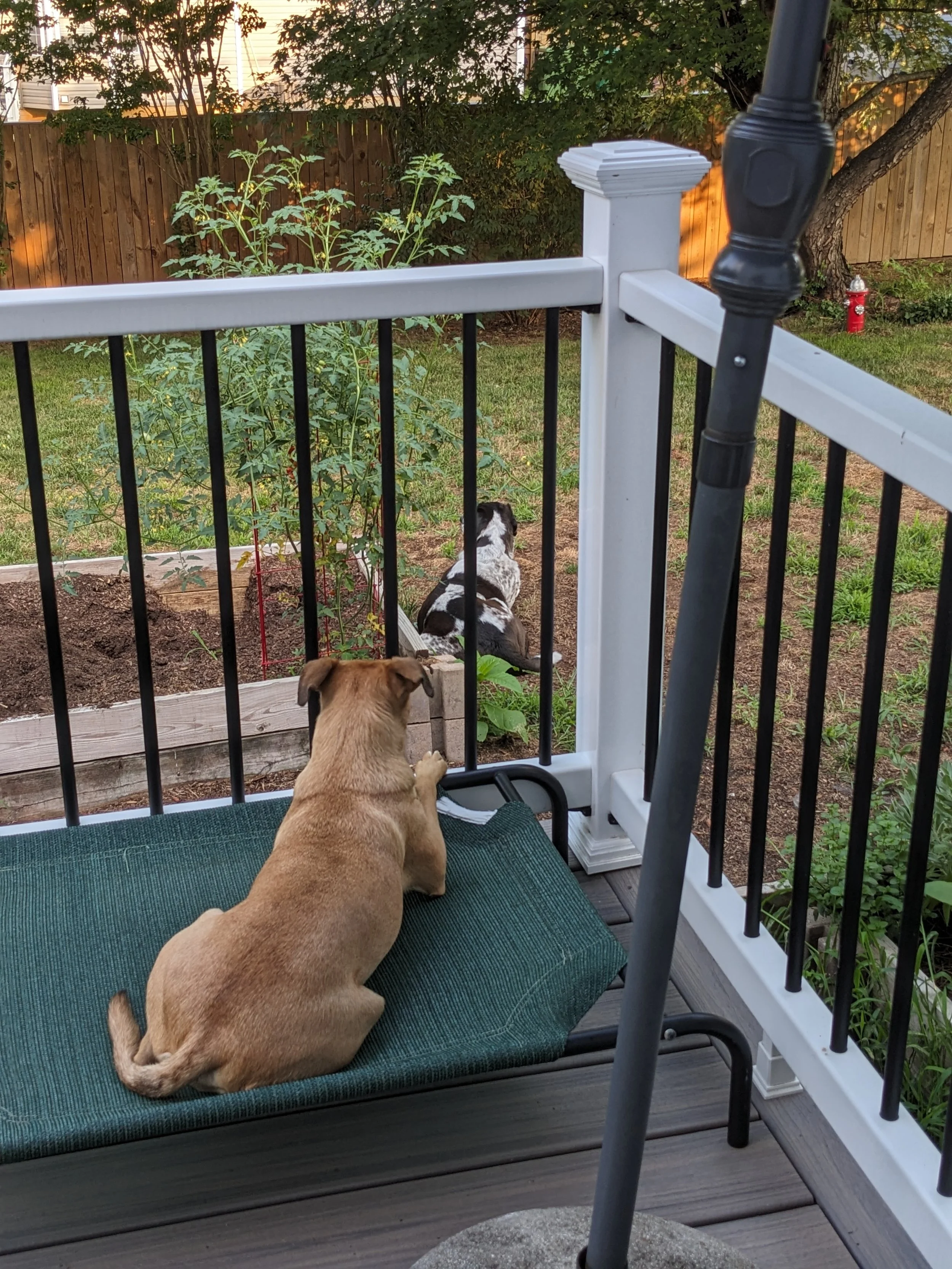
You already know this power if you have ever walked a dog who once saw a bunny dash out from a certain bush. For the next hundred walks, that bush must be checked. Thoroughly. Every time. Dogs are brilliant at pairing a place with a wonderful surprise, and they never forget where the good stuff happened. We are simply borrowing that same remarkable ability and pointing it at a skill we want the dog to have: a deep, genuine love for their boundary.
In class, you will see the rhythm at work. We play a few games, engaging the brain and body, and then we support the dogs in returning to their boundaries, using games that lower arousal and help them gently find the mental ability to settle. Then we play again. And return again. Activity, then calm. Engagement, then rest. We are not building an on and off switch. We are building a dimmer switch, teaching the dog to slide gently between happy engagement and rest.
Learning to move along that scale is one of the most valuable life skills a dog can have.
Now, here is something I want to be very clear about, because it sits at the heart of my philosophy. I never talk about using a boundary to control a dog, punish a dog, or make a dog stay. What we are building is something far more powerful and much further upstream. We are building the dog's ability to choose the boundary, because it has been so rewarding in their past.
Think about the difference. Impulse control, the way it is usually taught, depends on the environment being manageable, on endless repetitions, and on the dog not failing too often. It is fragile. It asks the dog to hold themselves back from what they want. But when a dog's brain has learned to anticipate calm, happy emotions on their boundary, something remarkable happens. Their body starts moving toward that emotional and physical state before they even arrive. They are not resisting anything. They are choosing something. We are using biology, the same pairing power that made that bunny bush unforgettable, to help our dogs make their own powerful choices. That is what upstream behavior work looks like. And this is why Jill and I love it so much.
What we are really building is a dog who keeps that wonderful operant brain, that willingness to try and engage and offer, and who also knows how slow down. A dog who has a place to be when they are not sure what happens next. When the doorbell rings, when dinner is being made, when the household feels busy or uncertain, the boundary answers the question every dog is quietly asking: what should I do right now?
And the beautiful thing is how far it travels. A boundary transfers to the vehicle, giving your dog a settled place for every ride. It works wonders when visitors arrive. It gives an unsure dog somewhere secure to land while they take in new information. It makes dogs simply easier to live with, not because we have suppressed anything, but because we have given them a skill and a choice.
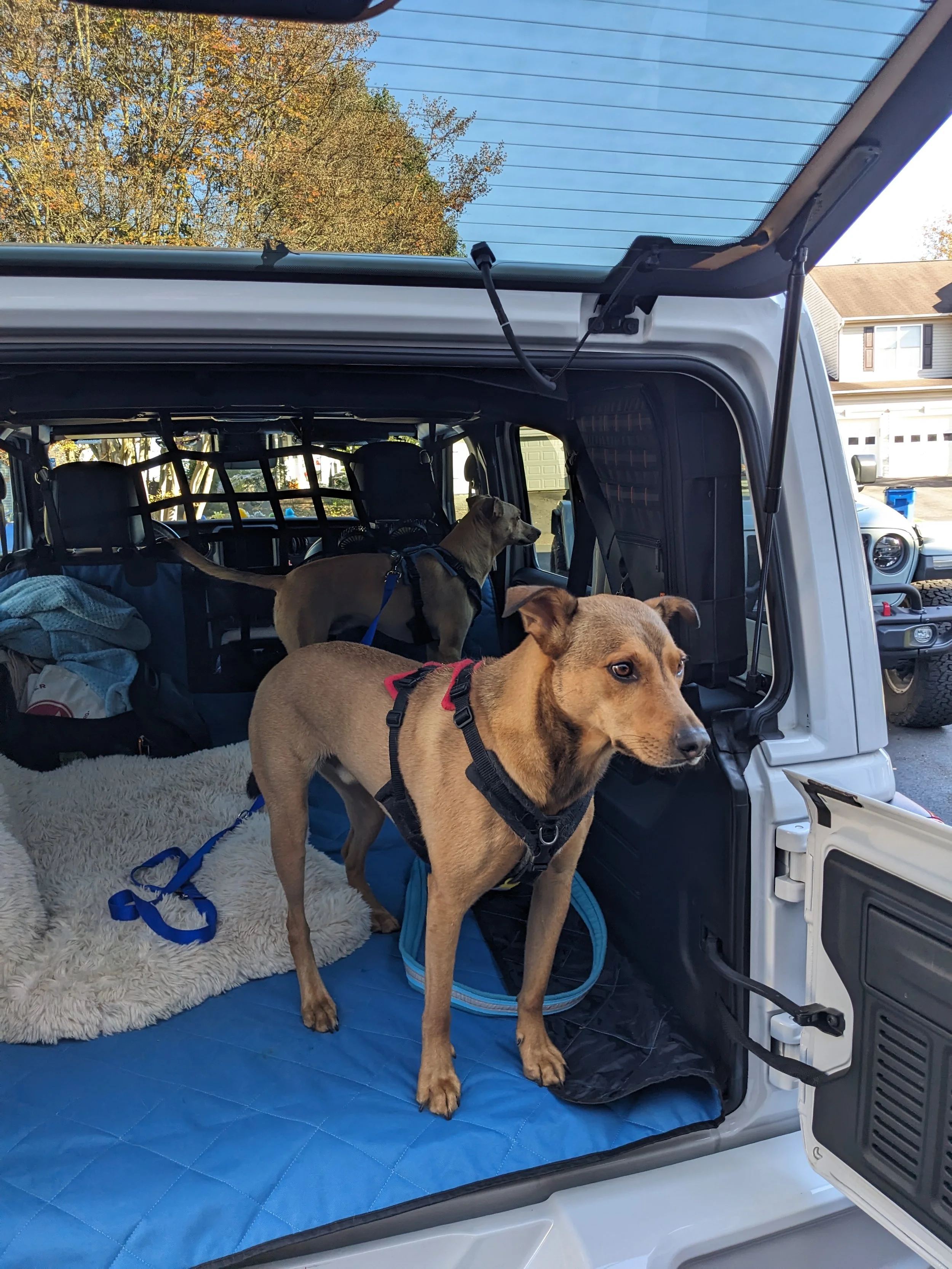
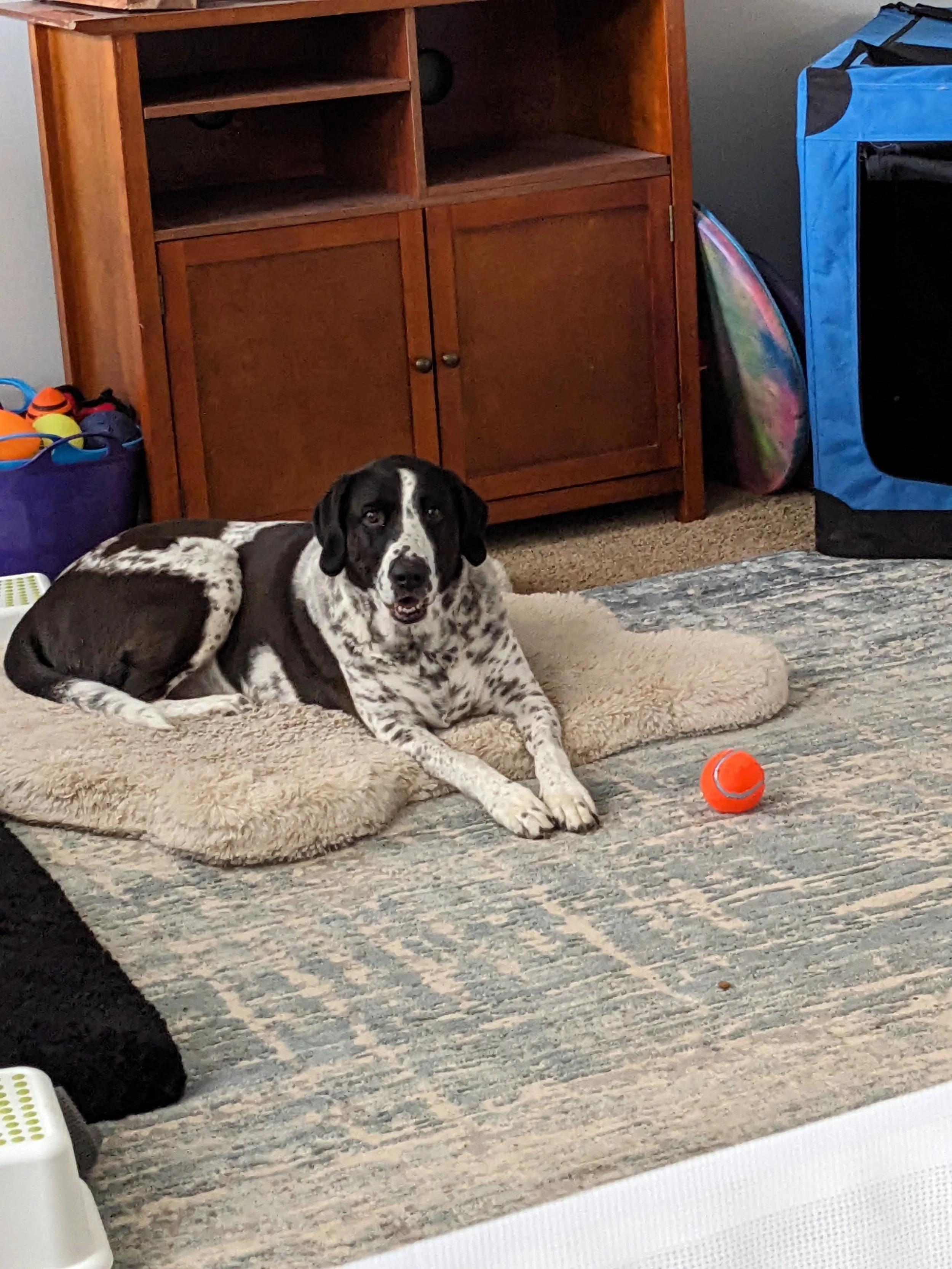
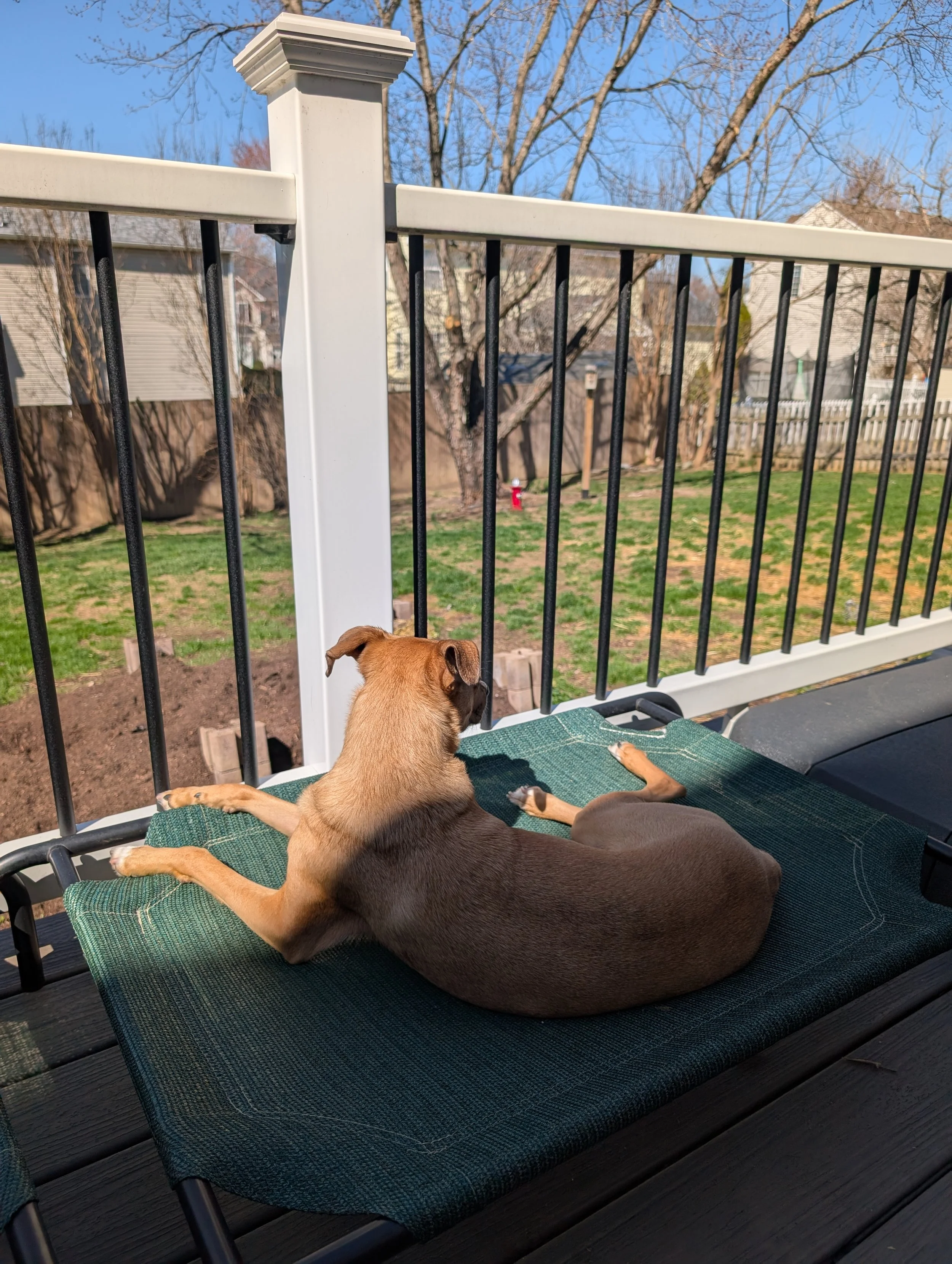
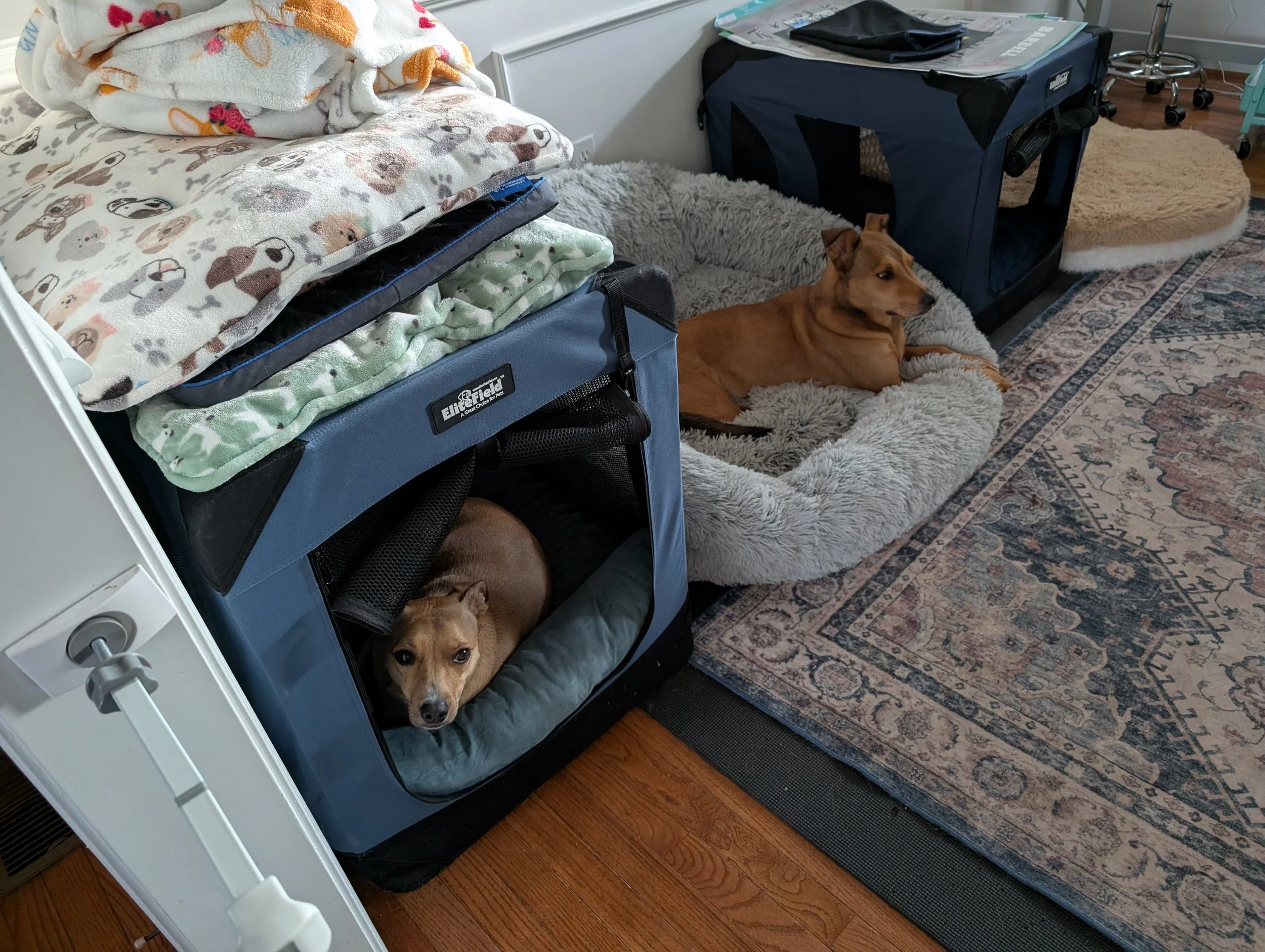
So when my student follows his mom around the house, hoping it is training time, I celebrate that hope. And I also know that his boundary work is what lets all that lovely enthusiasm live comfortably inside a family home. The motivation and the calmness were built together, from day one, on purpose.
That is the philosophy. No magic, no secrets, just thoughtful choices you can absolutely make with your own dog, starting today. Toss a treat on the bed. Let being there feel wonderful. You have just begun. Welcome to the Crew.
Compassion is our compass,
Jen 🐾